Branding for Therapists: How to Build Trust and Attract Ideal Clients
By Chloe Leonard, Founder of CL Studio
Branding for therapists is often misunderstood as something purely visual: a logo, a color palette, a website that looks professional enough.
But your brand is not what you say about your practice. It is how someone feels when they land on your site, read your words, or consider booking a session. In a field built on trust, safety, and connection, branding is not optional. It is foundational.
Your future clients are often in a vulnerable place when they start looking for a therapist. They are asking unspoken questions before they ever reach out: Am I safe here? Will this person understand me? Can I trust them? The role of your brand is to quietly answer those questions before you ever speak.
This is the complete guide to building a therapy brand that does exactly that — from strategy and visual identity to your website, your voice, and knowing when it is time to invest.

Your brand and website should be working for you 24/7. Are they?
Get a full Brand & Website Audit delivered in 5 business days so you can stop guessing, and start fixing.
Start With Strategy, Not Design
The strongest therapist brands are built from the inside out. Before you choose a color palette or hire a designer, you need clarity on the strategic foundation underneath everything else.
That starts with understanding who you actually serve. Not just demographics, but the psychographic portrait of your ideal client: what they are struggling with, what they have tried before, what they need to feel before they trust someone enough to book. A therapist specializing in trauma needs a completely different brand than one focused on relationship counseling or executive performance coaching. The audience is different, the emotional need is different, and the brand should reflect that.
Before any design decisions, it helps to sit with a few honest questions.
Who do you do your best work with?
What values guide how you practice?
What do you want someone to feel after their first session, and after their tenth?
When these questions are answered thoughtfully, everything else, the visuals, the copy, the tone, becomes an expression of something real rather than a collection of design choices.
This strategic foundation is what separates a brand that feels like you from one that just looks like a therapist.
Visual Identity: Design That Communicates Safety
Color
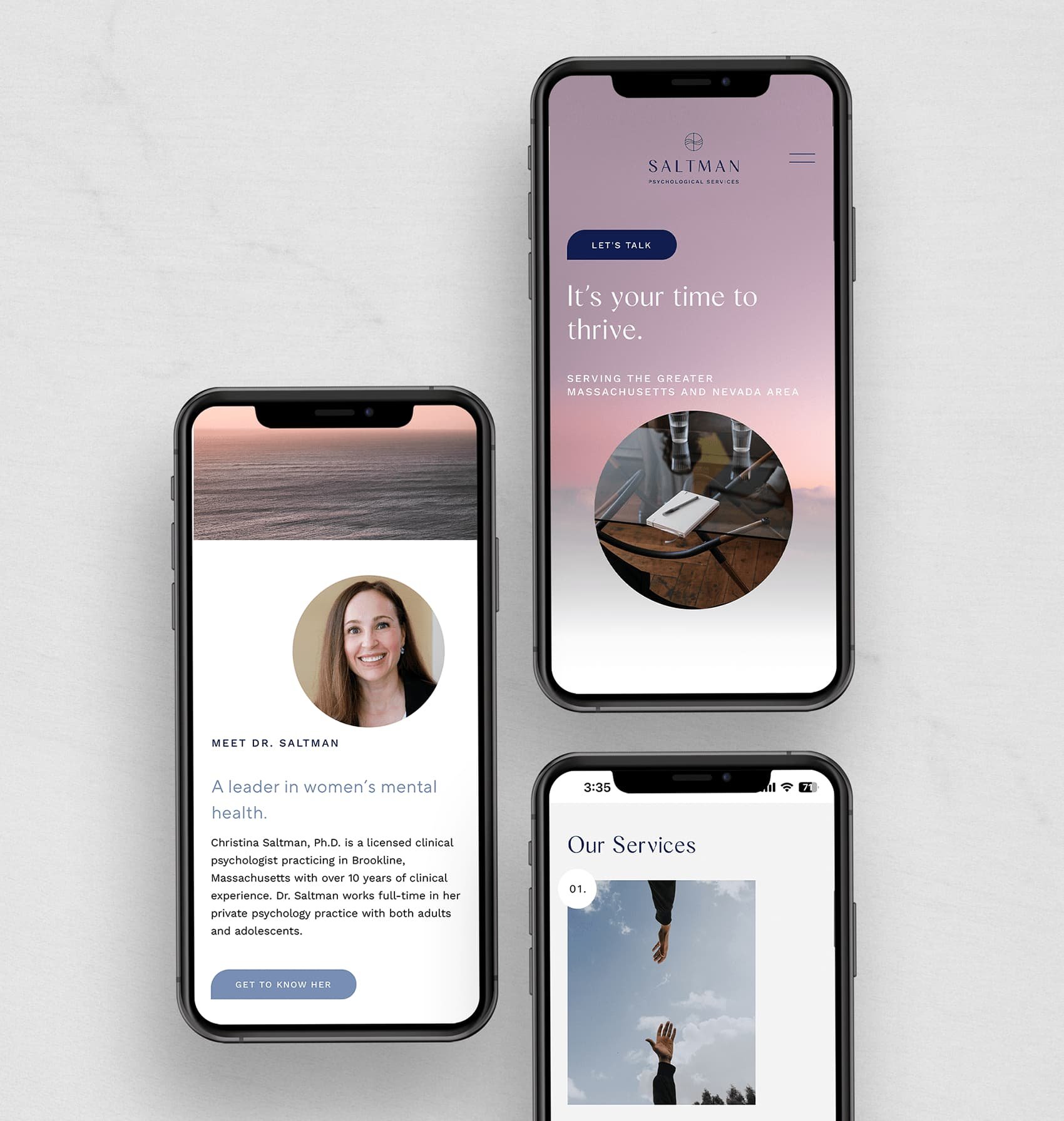
Color in therapy branding does serious work. Soft neutrals, muted earth tones, sage greens, warm whites, and dusty blues tend to communicate calm and safety, which is what most clients need to feel before reaching out. Bright, high-contrast palettes can feel stimulating or corporate, which is rarely the right message for mental health work.
That said, your palette should still feel like you. If you work with teen athletes and your energy is more dynamic, your visual approach might look different. If you are a therapist who is bold and direct and that honesty is part of what draws clients to you, lead with that. The goal is not restraint for its own sake. It is honesty. Let your palette be an extension of how you actually show up.
Typography
Serif fonts tend to communicate warmth, tradition, and trustworthiness. Sans-serifs feel clean and modern. The key is intentional pairing; a warm serif headline with a clean body font is a classic combination that works well for most therapy brands. Whatever you choose, use it consistently across every touchpoint. Inconsistency in typography signals inconsistency in the brand, and that erodes trust before anyone reads a single word.
Photography
For solo practitioners, brand photography is one of the highest-return investments you can make. Clients want to see the person they are about to be vulnerable with. A headshot that feels approachable and warm does more to build trust than any graphic element. If you are not ready for a full brand shoot, even a well-lit, intentionally framed photo is better than a generic stock image. Your face, your space, your energy, these things matter and clients can feel when they are authentic versus staged.
Your Website: Where the Decision Actually Gets Made
For most therapy practices, the website is where the decision is made. Someone finds you online, lands on your homepage, and in the next sixty seconds decides whether to keep reading or go back to the search results. That sixty seconds matters enormously.
Your Homepage - Your homepage needs to do three things immediately: tell visitors exactly who you help, make them feel understood, and show them what to do next. A headline that speaks directly to your ideal client's experience (rather than leading with your credentials) will always perform better. People do not come to your homepage looking for a list of qualifications. They come looking for evidence that you understand them.
Your About Page - The about page is often the most-visited page on a therapist's website, and most therapists underuse it. Do not lead with your degree or a clinical summary of your approach. Lead with something human. Why did you become a therapist? What is your philosophy? What do clients say about working with you? This is the page where someone decides whether to trust you. Give them something real to hold onto.
Your Services Page - Be specific. Vague service descriptions like "therapy for anxiety and depression" do not help someone self-select. The more clearly you describe who you work with and how, the easier it is for the right person to say yes, and for the wrong person to keep looking. That is not a flaw. That is the brand doing its job.
Trust Is Built Through Consistency
Trust is rarely built in a single moment, but rather accumulated through consistency over time. When your website, your messaging, your tone, and your visuals all reinforce the same story, clients feel a sense of steadiness in your presence. They know what to expect, which is always reassuring, especially when they are considering therapy.
A cohesive brand does not need to be loud or overly expressive. The most effective therapist brands are often quiet and confident, so design should never overpower the message – it should elevate it.
As a branding agency for small businesses, our approach at CL Studio stays consistent whether we are working with a solo practitioner or a group practice. We start by getting clear on what makes each practice singular (the why and the how behind the work) and then translate that into a brand that reflects those values with intention. That kind of genuineness is what allows both the practice and its clients to feel seen. It makes the decision to reach out feel less like a transaction and more like a step toward something that was already theirs.

Your Brand Voice: How You Sound Matters as Much as How You Look
How you speak to potential clients through your brand matters just as much as what you say in session.
Most clients searching for a therapist are not looking for clinical language or marketing buzzwords. They want to feel seen and cared for, in plain and warm language. A grounded, non-judgmental voice that reflects real understanding goes a long way. Your brand voice should feel like an extension of how you show up in the room: authentic, curious, present.
The most common mistake therapy brands make with copy is being too careful. Too neutral. Too generic. Your brand has a point of view, AKA a specific way of working with people, a set of values that shape every session. Let that show in how you write.
Attracting the Right Clients Through Alignment
Effective branding for therapists is not about appealing to everyone. It is about speaking clearly to the people you are best equipped to help.
When you communicate your approach, your values, and your areas of focus with clarity, you naturally attract clients who are a genuine fit, and allow the ones who are not to keep looking. That self-selection is a gift. It means less time explaining yourself on discovery calls and more time doing the work that matters.
A strong brand allows the right client to land on your website and feel, before they have even read much, that they have found someone who gets it. That is the goal.
Branding in Practice: Elevé Therapy & Co
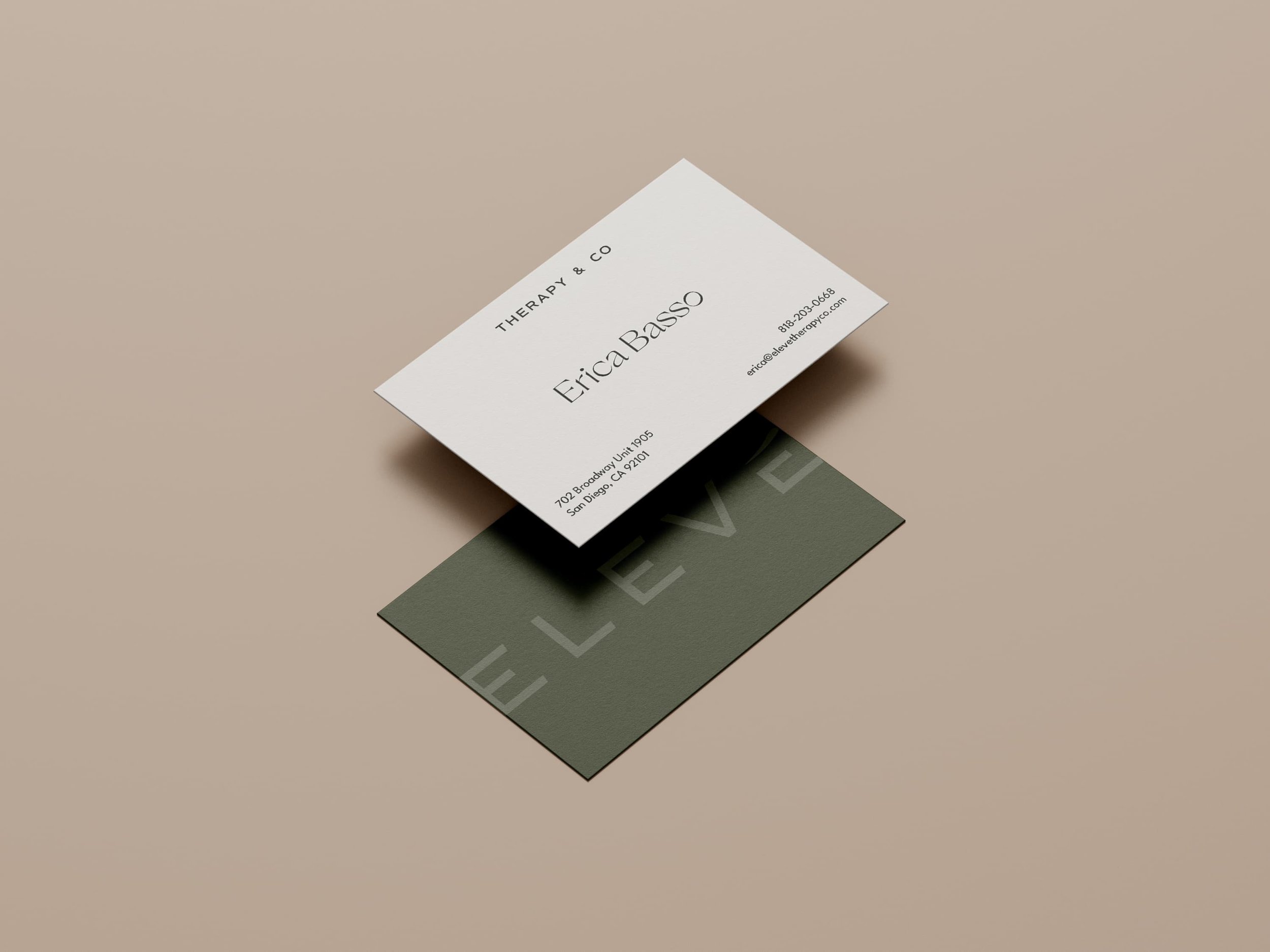
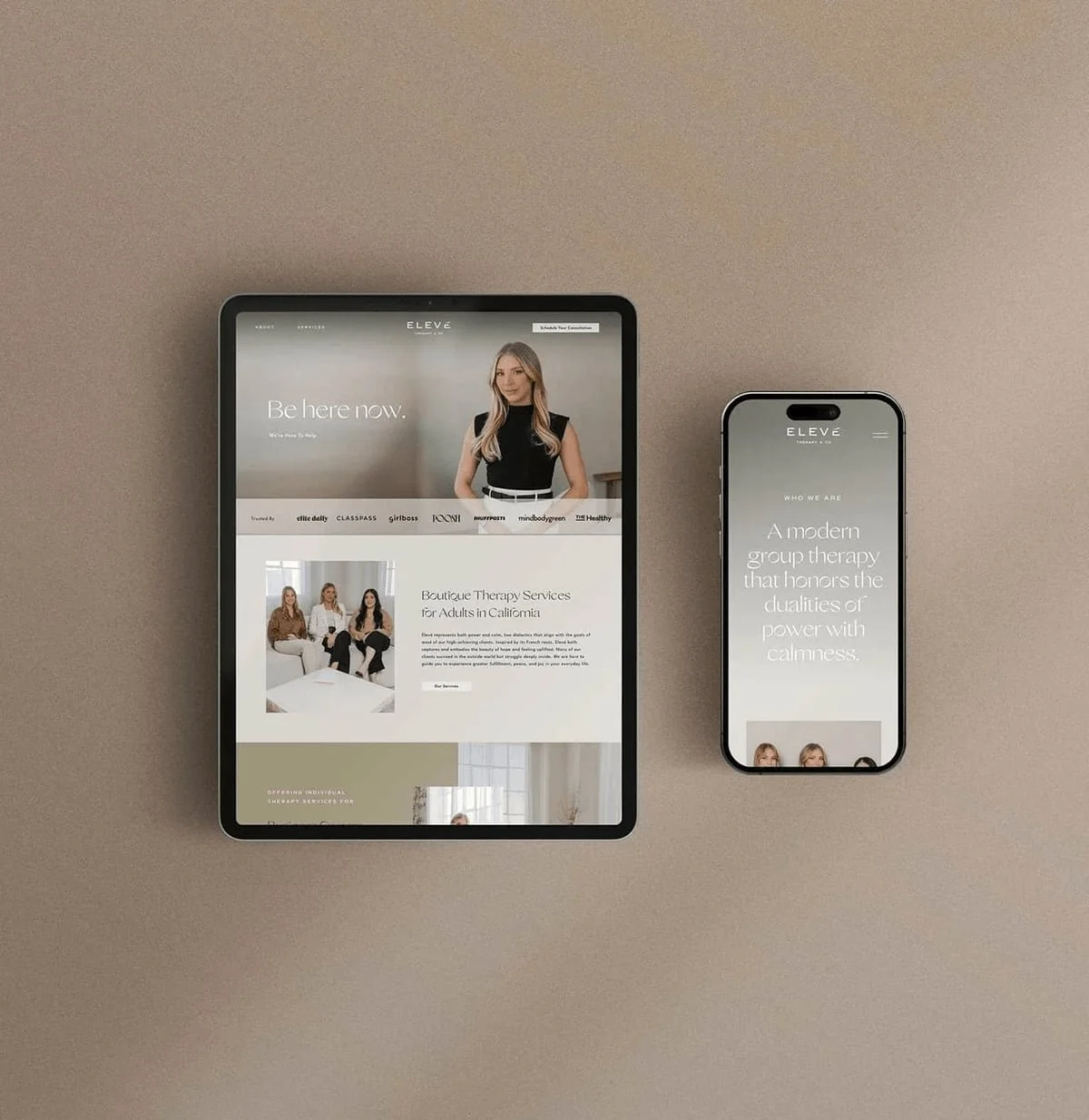
One of our favorite examples of therapist branding done right is our work with Elevé Therapy & Co, a San Diego-based practice that came to us as a one-person operation and needed a brand that could grow with them into a fully realized multi-practitioner group.
The challenge with group practices is that the brand has to hold space for multiple practitioners with distinct approaches while still feeling unified and trustworthy. We built Elevé's identity around the core emotional need of their clients (the desire to feel elevated rather than just treated) and created a visual and verbal brand that is warm, refined, and professionally grounded. Since the rebrand, Elevé has grown its team, expanded its services, and built a brand presence that works for them around the clock.
When to Invest in Professional Branding
If you are just getting started, a simple, clean, and consistent brand is enough. You do not need full custom branding on day one.
But if you have been in practice for a few years and you are ready to raise your rates, attract a more specific kind of client, or grow your team, your brand should reflect that ambition. The clearest sign it is time: if you feel hesitant to share your website, or if you keep explaining yourself on calls because your site did not do it for you, that is the signal.
Frequently Asked Questions
What makes branding for therapists different from other service businesses?
The emotional stakes are higher. Clients are not just evaluating your qualifications, they are deciding whether they feel safe. Your brand needs to do the trust-building work before the first call even happens, which means every visual and verbal choice carries more weight than it would in most other industries.
Do I need a custom brand, or can I use a template?
Templates can work well early on, especially if they are thoughtfully customized to feel like you. Where they tend to fall short is in distinctiveness. A template brand rarely communicates a specific point of view, and that specificity is exactly what helps clients choose you over someone else. As your practice grows and your positioning sharpens, custom branding becomes a meaningful investment.
How much does branding for a therapy practice cost?
It varies widely depending on scope. A full custom brand identity and website from a boutique agency typically ranges from $5,000 to $20,000+. Semi-custom options can be a strong middle ground for practices that are not ready for that level of investment but want something more than a DIY template. We offer both at CL Studio and are happy to talk through what makes sense for where you are.
How long does the process take?
A full branding and web design project typically runs six to twelve weeks from kickoff to launch. The timeline depends on scope, how quickly decisions get made, and how much copy and photography are already in place coming into the project.
Can I work with CL Studio remotely?
Yes. We work with therapy practices across the US. Most of our clients are based outside Nashville, and our process is built to work well remotely from the first conversation through launch.
Ready to Build a Brand That Does the Work for You?
At CL Studio, we specialize in working with therapists and mental health professionals to build brands that communicate exactly the right things to exactly the right clients. We take a thoughtful, collaborative approach — starting with strategy, moving through identity and web design, and ending with a brand presence that feels honest, grounded, and unmistakably you.
If your practice is ready for a brand that matches the depth of your work, we would love to have a conversation.

Hi there! I'm so glad you found us in this corner of the internet.
I'm Chloe Leonard, the founder of CL Studio, a boutique creative agency based in Nashville, TN. After 10 years of working with hundreds of clients, including Almost 30 Podcast, Clearstem Skincare, Harper Collins, and Free People, I've become more passionate than ever about giving founders the clarity and tools to build brands that TRULY stand out.
We help service-based and eCommerce businesses move from DIY beginnings to fully-realized. brands – built with confidence and longevity in mind. Because good brands show up, but great brands own the room for years to come.
download the free guide
Feel like your brand is missing the mark? Not sure where to start?
As a creative agency for almost a decade, we know where a brand needs a little TLC. That’s why we created the free brand audit guide so you can finally see your brand clearly, and know exactly what to fix.