
If you run a service-based business, email marketing probably feels a little murky. You are not dropping new products or running flash sales. You are selling your time, your expertise, and your results, and that requires a completely different approach to what you send and how often you send it.
The good news is that email is one of the most powerful tools a service provider has. It is where relationships deepen, trust builds, and potential clients go from casually following you to genuinely ready to book. The key is understanding what to send and when, so your emails feel like a natural, valuable part of someone's week rather than a promotional interruption.
Here is a clear framework for doing exactly that.
First, Understand What Your Email List Is Actually For
For product-based businesses, email is primarily a sales channel. For service providers, it is primarily a relationship channel that leads to sales.
This distinction matters because it changes how you approach every email you send. Your subscribers are not a transaction waiting to happen. They are people who are curious about you, somewhere in the process of deciding whether you are the right fit for what they need. Your job is to stay present, be genuinely useful, and make sure that when they are ready to invest, you are the first person they think of.
That does not mean you never sell. It means you earn the right to sell by showing up consistently with content that is actually worth reading.
The Four Types of Emails Every Service Provider Should Be Sending
1. The Educational Email
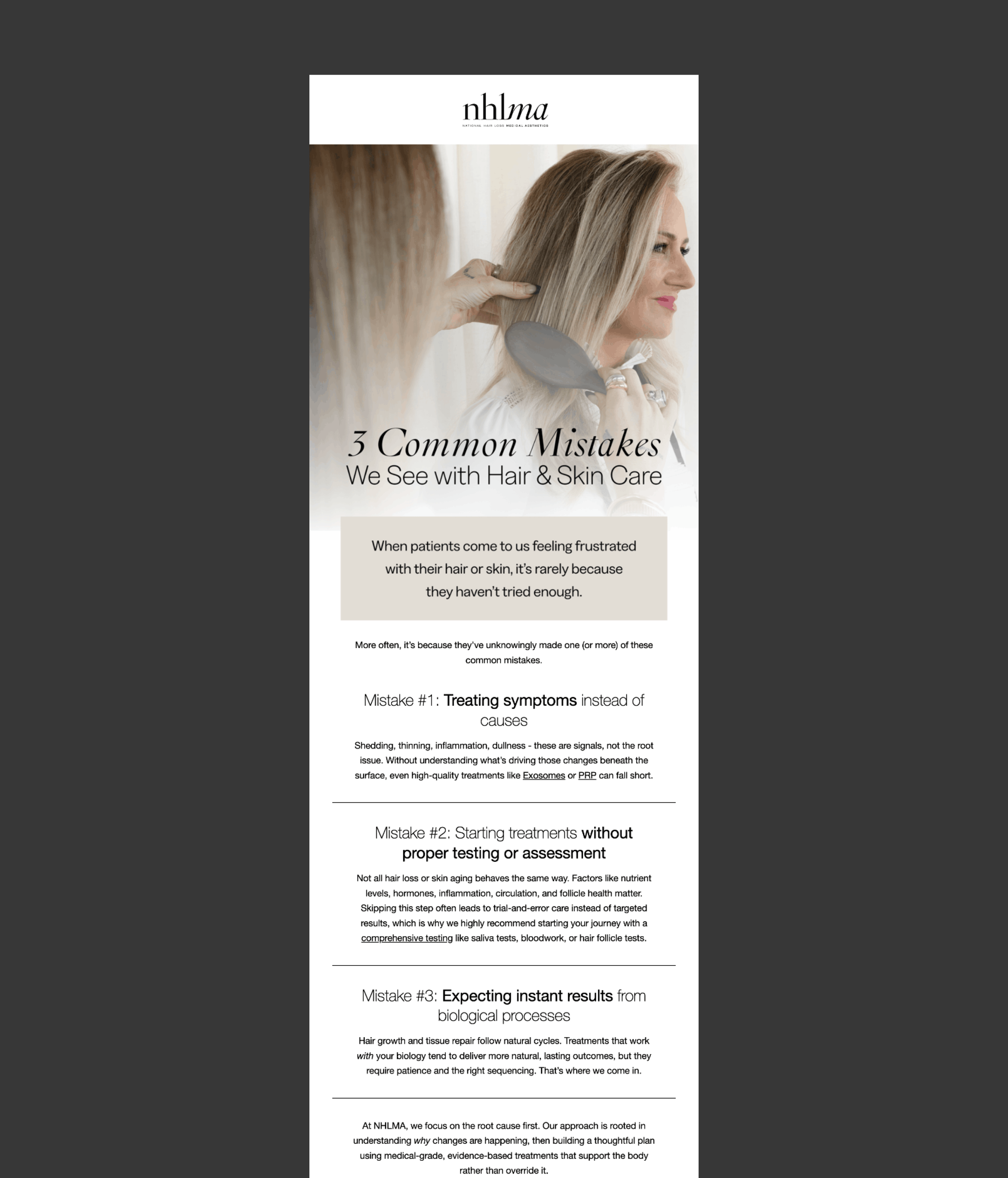
This is your bread and butter and the type of email you should be sending most often. Educational emails share your expertise in a way that is immediately useful to your subscriber, without requiring them to hire you first.
Think about the questions your clients ask you all the time before they book or about the mistakes you see service providers in your industry making repeatedly. Better yet, things you know that your ideal client wishes they understood better. Those are your educational emails.
A brand strategist might send an email about how to tell if your brand positioning is confusing potential clients. A web designer might send an email about the one page most small business websites are missing. A copywriter might share a formula for writing a homepage headline that converts.
The goal is not to give everything away for free. It’s to demonstrate that you know your craft deeply and that working with you would be worth it.
2. The Story Email
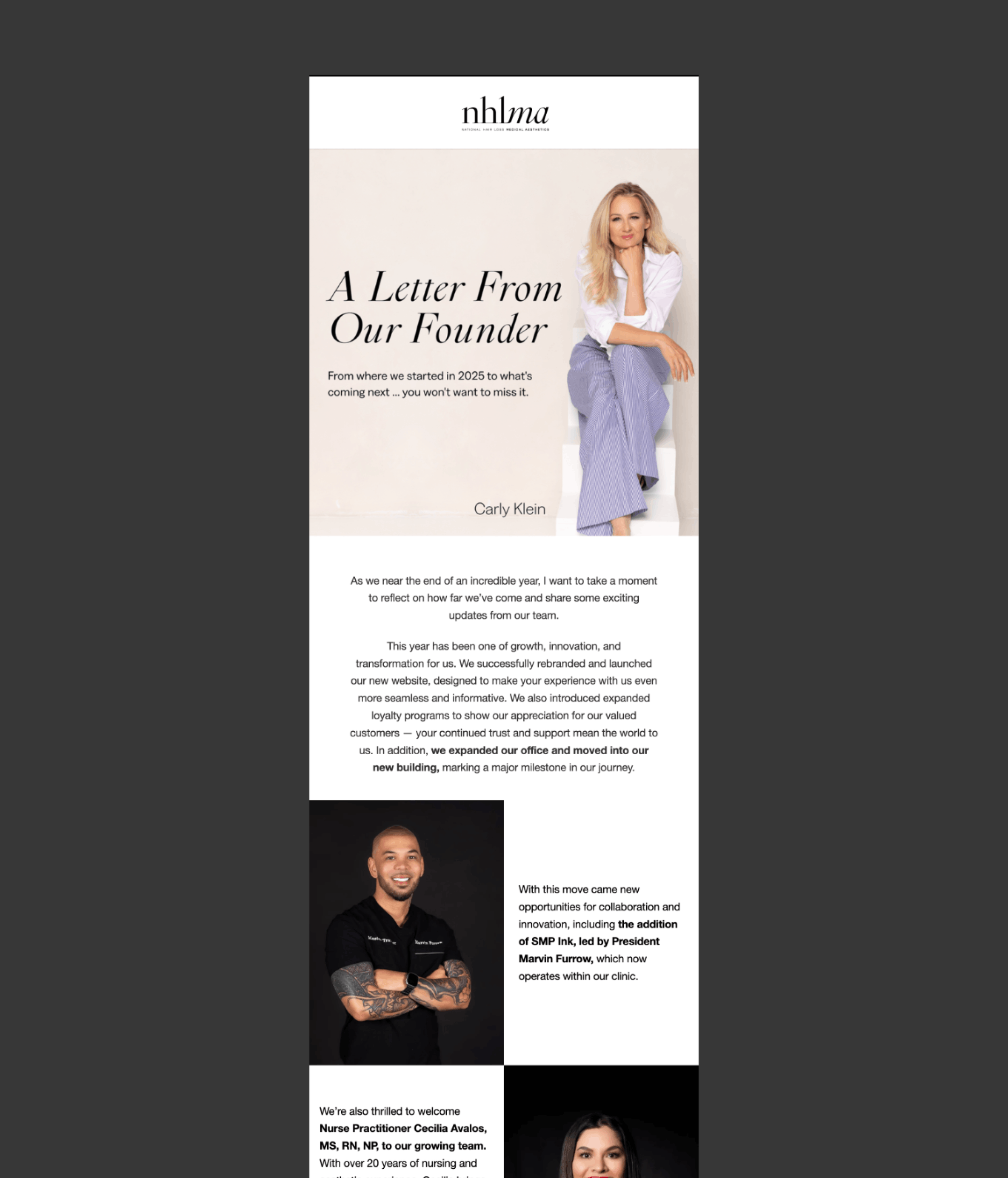
Service providers sell trust as much as they sell skills, and nothing builds trust faster than a genuine story. Story emails can take a lot of forms: a behind the scenes look at how you work, a turning point in your business journey, a lesson you learned the hard way, or a client transformation that illustrates what is possible.
The goal of these emails is to make your subscriber feel connected to you as a person, not just aware of you as a business. That emotional connection is what separates the service providers whose lists convert at a high rate from the ones who get plenty of opens but very few inquiries.
Send a story email once or twice a month, with a few paragraphs of genuine, specific storytelling will do more for your business than a perfectly polished newsletter every time.
3. The Social Proof Email
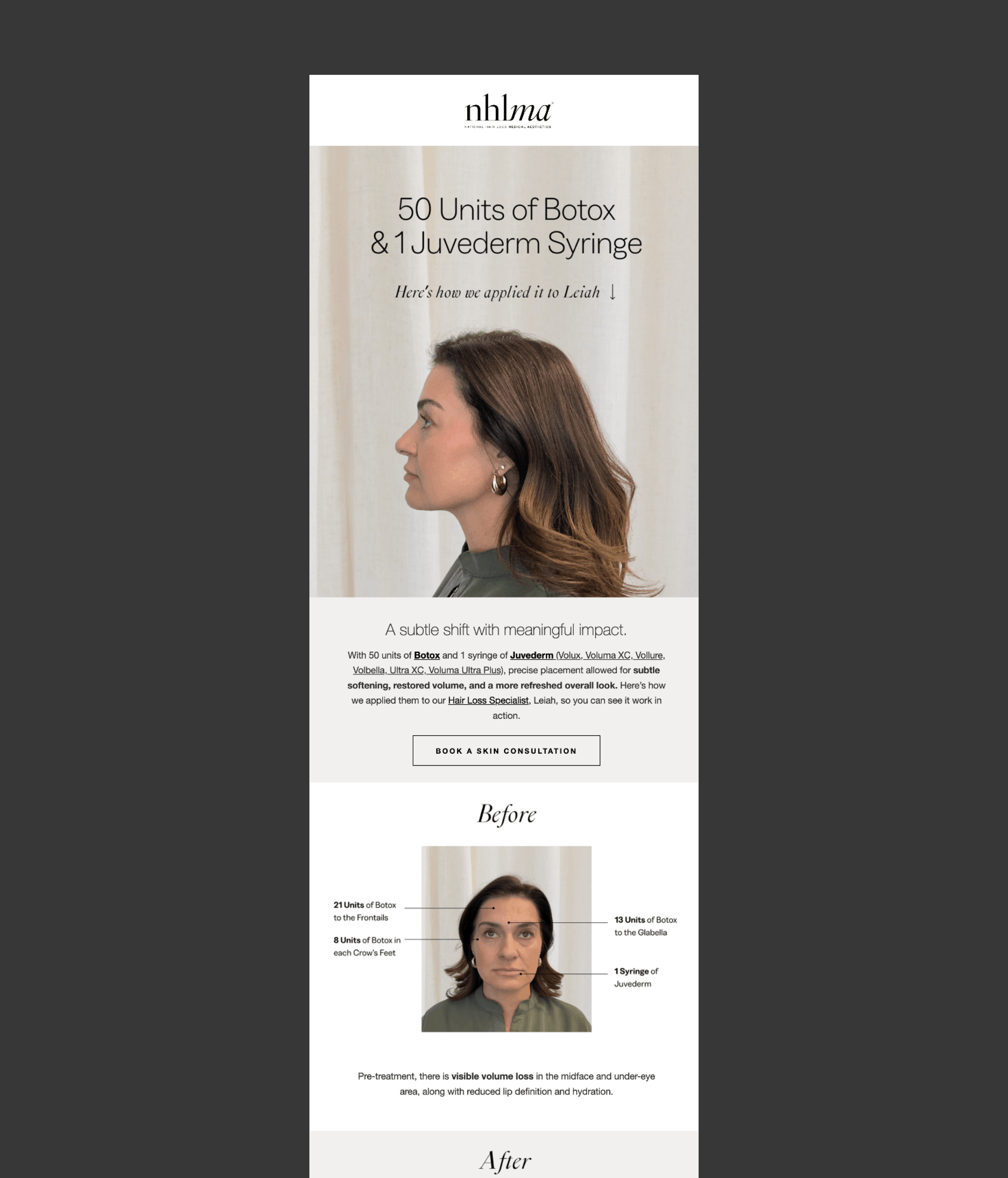
At some point in the relationship, your subscriber needs to see evidence that you deliver results for real people. Social proof emails can be as straightforward as sharing a client testimonial with a brief note about the context, or as detailed as a short case study walking through the challenge a client came to you with and what changed after working together.
The most effective social proof emails are specific. Not "my client was so happy with the results" but "my client came to me with a website that was getting traffic but no inquiries, and three months after we relaunched she booked out her next four months." Specificity is what makes social proof believable and compelling.
4. The Offer Email
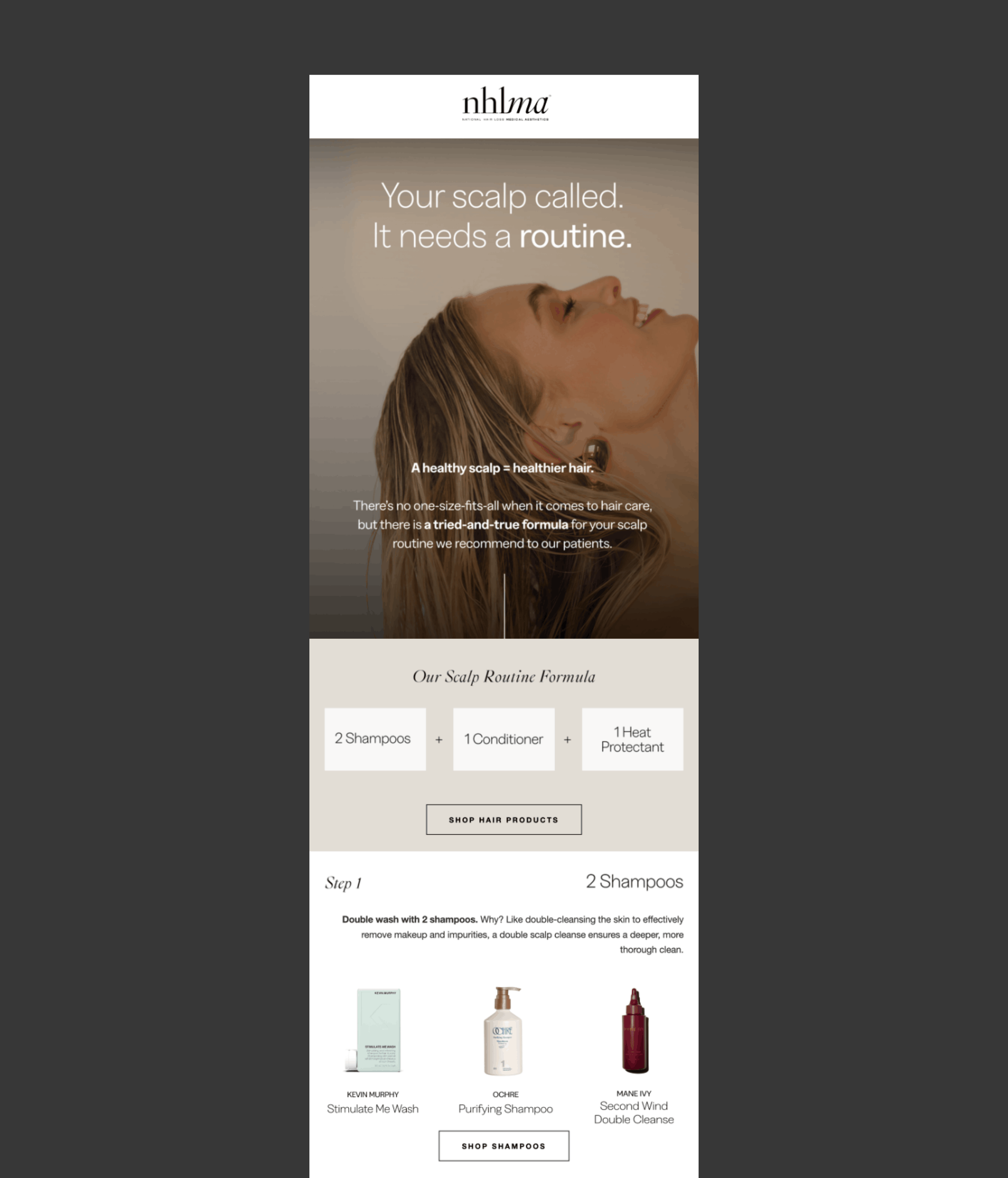
Once you have been consistently showing up in someone's inbox with value, making an offer feels natural rather than pushy. Offer emails are where you tell your list directly about your services, a current availability opening, a limited time package, or an invitation to book a discovery call.
A lot of service providers avoid sending offer emails because they are afraid of coming across as salesy. But if you have been delivering genuine value consistently, your subscribers want to know how to work with you. This kind of email is information they are probably waiting for.
So, send an offer email whenever you have availability to fill, are launching something new, or have not made a direct ask in a while.
How Often Should Service Providers Email Their List?
The honest answer is consistently, whatever that looks like for your schedule. Once a week is ideal for building momentum and staying top of mind. Every two weeks is workable if your content is high quality. Once a month is the minimum before your subscribers start forgetting who you are.
What kills email lists for service providers is inconsistency. Sending five emails in two weeks and then going silent for two months trains your subscribers to tune you out. Whatever cadence you can sustain without sacrificing quality is the right cadence for you.

Stuck on where to even begin with your email strategy as a service provider?
That’s why we created a free Essential Emails Guide for eCommerce and Service Businesses so you can review your messaging, design, and consistency with clarity and confidence, and start making improvements that actually move the needle.
A Simple Monthly Email Calendar for Service Providers
If you are not sure where to start, here is a basic monthly structure that works well:
Week one: An educational email sharing a tip, insight, or practical framework related to your area of expertise.
Week two: A story email, something personal or behind the scenes that builds connection.
Week three: A social proof email featuring a client win, testimonial, or case study.
Week four: An offer email with a clear call to action to book, inquire, or learn more about working with you.
This rotation keeps your content varied, your relationships warm, and your business top of mind without requiring you to reinvent your strategy every month.
What Platform Should You Use?
For service providers, we recommend Flodesk for its beautiful, on-brand templates and simple flat rate pricing that does not penalize you for growing your list (PS: you can lock in 25% off your first year by clicking here!). If you are already on Squarespace, their built-in email tool integrates cleanly and is a solid option for getting started without adding another platform.
At CL Studio, we work with service-based small business owners across Nashville and nationwide, and email is one of the first things we talk about because it is so consistently underused. Most service providers are sitting on a warm audience that is ready to hear from them. They just need to start showing up.

Hi there! I’m so glad you found us in this corner of the internet.
I'm Chloe Leonard, the founder of CL Studio, a boutique creative agency based in Nashville, TN.
If you want help building an email strategy that actually reflects the quality of your work, CL Studio offers email marketing services for service providers and eCommerce brands. We would love to help you build something that works while you focus on the clients you already have.