
Written by Chloe Leonard, Founder of CL Studio
You sit down to write your email newsletter. You open your laptop, pull up your email platform, and stare at a blank screen for fifteen minutes before closing the tab and telling yourself you will do it tomorrow.
If this sounds familiar, you are not alone. One of the most common things I hear from small business owners is not that they do not want to email their list. It is that they genuinely do not know what to say.
The pressure to be constantly interesting, valuable, and original is real, and it is also a little bit made up. Your subscribers did not sign up for a publication. They signed up because they are interested in you and what you do. That gives you a lot more material to work with than you probably think.
Here is a full list of newsletter ideas you can come back to whenever the blank screen shows up.
Why Consistency Matters More Than Perfection
Before getting into the ideas, it is worth saying this plainly: a good email sent consistently will always outperform a perfect email sent occasionally. Your subscribers need to hear from you regularly enough that your name is familiar when it shows up in their inbox. That familiarity is what builds trust over time, and trust is what eventually converts a subscriber into a client or customer.
You do not need every email to be a masterpiece. You need it to be genuine, useful, and on time.
Newsletter Ideas You Can Use Any Time
Share a lesson you learned recently. Did something in your business go unexpectedly well this month? Did a project teach you something you did not know before? Did you change your mind about something you used to believe? Lessons learned are some of the most engaging emails you can send because they feel honest and real, and your subscribers can usually find something in them that applies to their own situation.
Answer a question a client asked you. Think about the last few conversations you had with clients or potential clients. What did they ask you? What did they not understand about your process? What misconception do you find yourself clearing up over and over? Write an email that answers that question as if you are talking to one person. These emails perform well because they address something your subscribers are almost certainly wondering too.
Share your honest take on a trend in your industry. You have opinions. Your subscribers want to hear them. If there is something happening in your industry that you think is overhyped, underrated, or misunderstood, say so. A point of view is one of the most valuable things you can share in an email, and it is something no one else can replicate because it is specifically yours.
Walk through your process. Most potential clients have no idea what working with you actually looks like from start to finish. An email that walks through your onboarding process, your creative process, or how you approach a specific type of project is genuinely useful for someone who is considering hiring you and is not sure what to expect.
Spotlight a client win. Share a recent result you are proud of, with the client's permission. Be specific about the challenge, what you did, and what changed. This is social proof delivered in the warmth of a personal email, which is more persuasive than any testimonial page.
Recommend a resource you have been using. A book, a tool, a podcast, a framework that has been genuinely helpful in your work or life. Your subscribers trust your taste because they already trust your expertise. A resource recommendation email feels generous and low-pressure, and it gives you something to write about on a week when you do not have a bigger idea.
Share something personal. Not oversharing, just real. A small moment from your week, something you are working through, a decision you made in your business and why. People subscribe to people, not just topics. A brief personal note at the top of an email or as the entire email itself is often what readers respond to most warmly.
Debunk a myth in your field. Every industry has conventional wisdom that is wrong, outdated, or more complicated than it gets credit for. Pick one and push back on it thoughtfully. These emails generate replies and shares because they say something worth disagreeing with.
Share a before and after. If your work produces visible or describable transformations, show one. A website before and after. A brand identity transformation. A client's revenue numbers before and after a new strategy. Before and afters are concrete, compelling, and inherently shareable.
Give them a peek behind the curtain. What does a typical week in your business look like? What tools do you use every day? What does your workspace look like? What are you currently working on? Behind the scenes content builds connection because it makes your business feel real and human rather than a polished front.
Revisit an older piece of content. If you have a blog post, a video, or a previous email that performed well or that you are particularly proud of, bring it back. Write a brief note about why it is still relevant, add any new thinking you have on the topic, and share the link. Your newer subscribers have never seen it, and your longer-term subscribers will appreciate the reminder.
Tell them what you are offering right now. This one is simple and underused. If you have availability, if you are accepting new clients, if you have a package you want to fill, just say so. Tell your list directly. An email that says "I have two spots open for web design projects this quarter and here is how to claim one" is not pushy. It is helpful information for someone who has been thinking about working with you.
A Simple System for Never Running Out of Ideas
Keep a running note on your phone labeled "email ideas." Whenever a client asks you something interesting, whenever you have a strong opinion about something in your field, whenever something happens in your business that taught you something, add it to the list. You will be surprised how quickly it fills up.
Before you sit down to write each week, spend two minutes scanning the list and pick the one that feels most relevant or alive to you right now. That energy will come through in your writing and your subscribers will feel it.
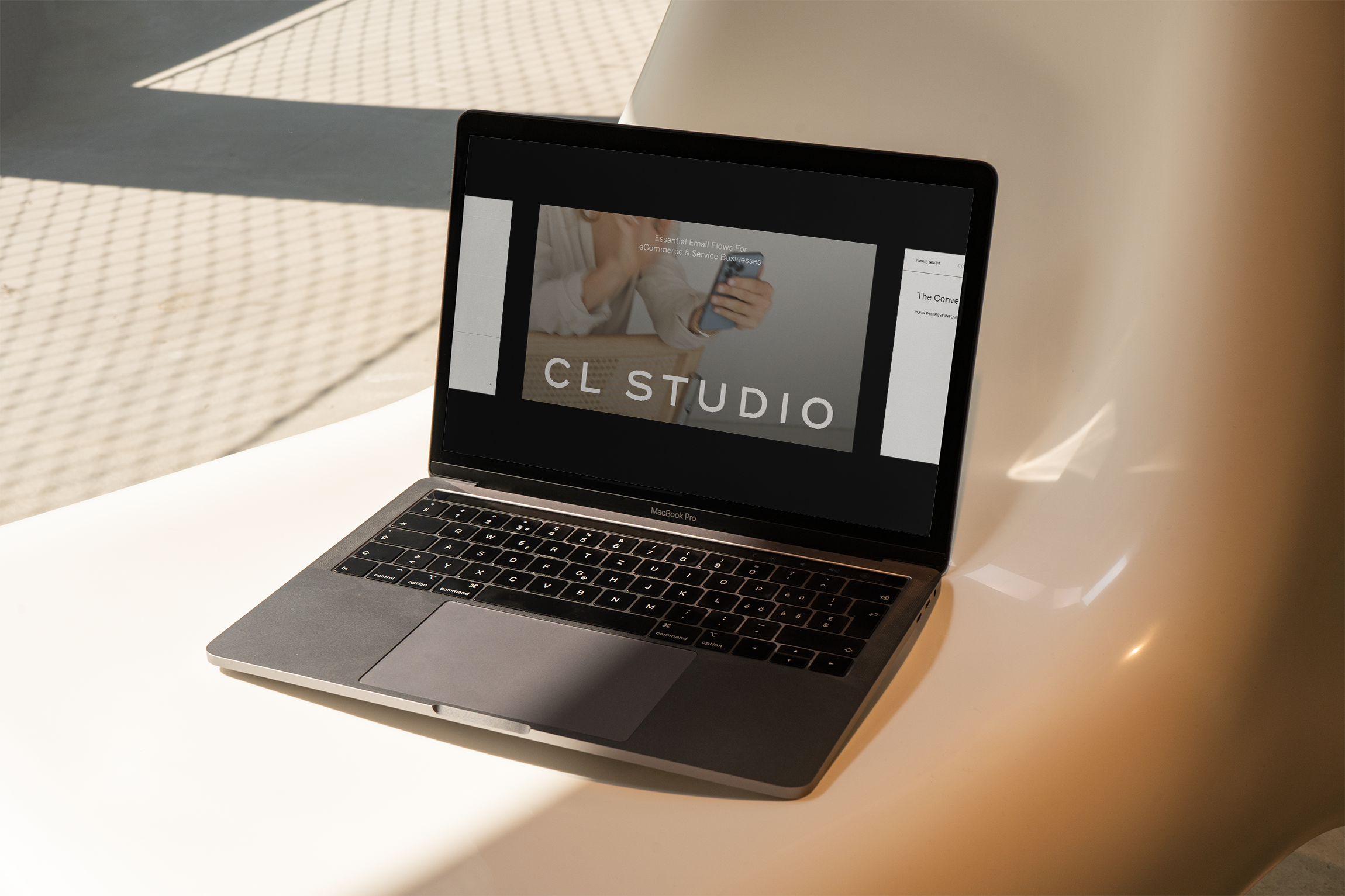
Don’t have an email strategy or even know where to start?
That’s why we created a free Essential Emails Guide for eCommerce and Service Businesses so you can review your messaging, design, and consistency with clarity and confidence, and start making improvements that actually move the needle.
At CL Studio, we work with small business owners in Nashville and nationwide as a branding agency for small business, and email content is one of the things our clients ask about most. The businesses that show up in their subscribers' inboxes consistently, in their real voice, are the ones that build real audiences.
If you want help building an email strategy that makes showing up easier, we offer email marketing services for service providers and eCommerce brands. Reach out here and let us know what you are working on.

Hi there! I’m so glad you found us in this corner of the internet.
I'm Chloe Leonard, the founder of CL Studio, a boutique creative agency based in Nashville, TN. After 10 years of working with hundreds of clients, including Almost 30 Podcast, Clearstem Skincare, Harper Collins, and Free People, I've become more passionate than ever about giving founders the clarity and tools to build brands that TRULY stand out.
We help service-based and eCommerce businesses move from DIY beginnings to fully realized brands — built with confidence and longevity in mind. Because good brands show up, but great brands own the room for years to come.