
By Chloe Leonard, Founder of CL Studio
Choosing an email platform is one of those decisions that feels small until you've outgrown the wrong one and have to migrate thousands of subscribers to start over. It's worth getting right the first time.
Klaviyo, Flodesk, and Mailchimp are three of the most common platforms I see among clients , and they serve genuinely different needs. Here's an honest breakdown of each.
Klaviyo
Best for: eCommerce brands, product-based businesses, anyone who needs advanced segmentation and automation.
Klaviyo is the most powerful of the three for data-driven email marketing. It integrates deeply with Shopify and other eCommerce platforms, pulling in purchase history, browsing behavior, cart abandonment data, and more. That data can then be used to trigger highly targeted flows and segment your list in ways that Mailchimp and Flodesk can't match.
If you want to send an email to customers who purchased a specific product more than 30 days ago but haven't bought since, or trigger an abandoned cart flow that pulls in the exact product left behind , Klaviyo handles that natively.
What you gain: Best-in-class automation and segmentation, powerful analytics, native eCommerce integrations, A/B testing, predictive analytics for things like expected next order date and lifetime value.
What you trade: A steeper learning curve than the other two. The interface is not particularly intuitive for beginners, and the pricing model (based on contact count) scales up quickly as your list grows. It's also genuinely overkill for service businesses that don't have purchase data to leverage.
Pricing: Free up to 250 contacts. Scales with list size , at 10,000 contacts, you're looking at roughly $150–$175/month.
Flodesk
Best for: Service providers, creatives, coaches, and small businesses that want beautiful emails without a complex setup.
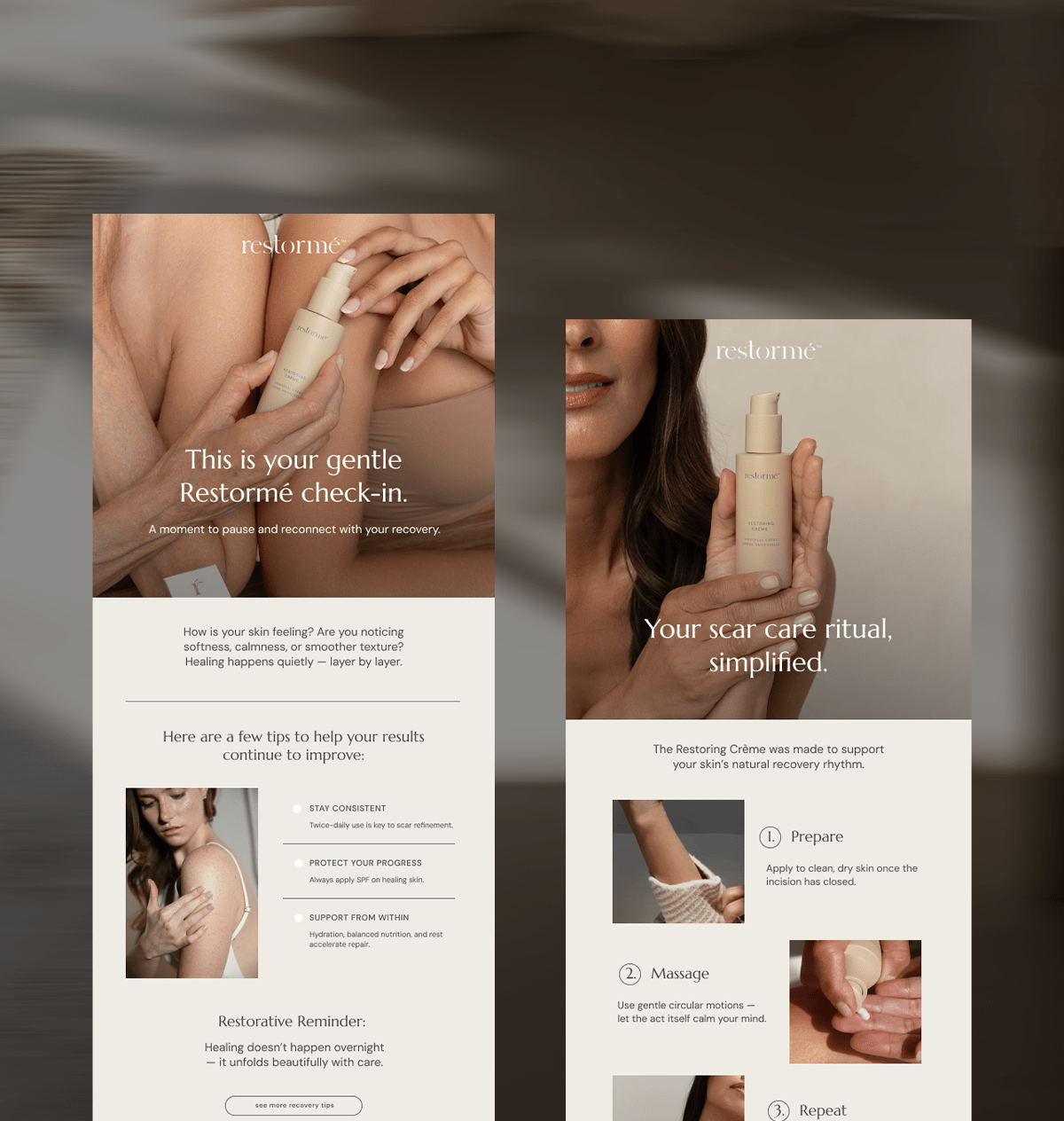
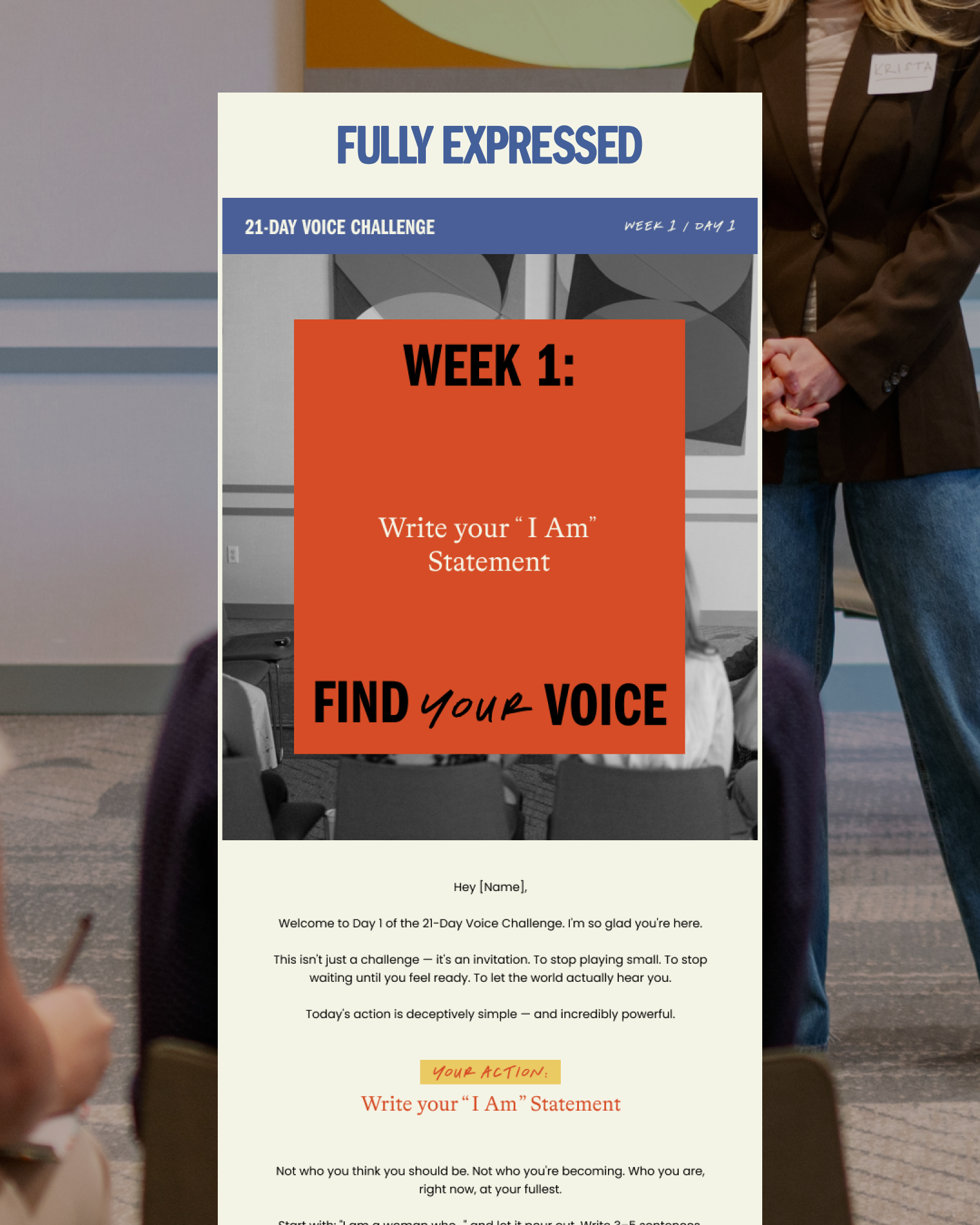
Flodesk's differentiator is design. The email editor is the most intuitive and visually polished of the three, and it produces emails that look like they were designed, not assembled from a template. For brands where visual identity matters , and that's most of the clients we work with at CL Studio , Flodesk emails feel on-brand in a way that Mailchimp rarely achieves without significant manual effort.
The automation builder is straightforward and covers the core use cases: welcome sequences, nurture flows, lead magnet delivery, and simple sales sequences. It's not as powerful as Klaviyo, but it's more than enough for most service-based businesses.
What you gain: Beautiful, brand-consistent emails, flat-rate pricing regardless of list size, clean and simple interface, strong for visual storytelling.
What you trade: Less robust automation and segmentation than Klaviyo, limited native integrations compared to the other two, and analytics that are functional but not deep. It's not the right tool if you're running complex behavioral automations or need granular reporting.
Pricing: Flat rate , currently around $38/month (or $19/month annually). The same price whether you have 500 subscribers or 50,000, which is a meaningful advantage for growing lists.
Mailchimp
Best for: Businesses just starting with email marketing, or those that need a free plan to get started.
Mailchimp is where a lot of small businesses start, and for good reason , the free plan is generous, the platform is widely familiar, and the setup is straightforward. It integrates with almost everything.
That said, Mailchimp has lost ground to both Klaviyo and Flodesk in recent years. The email designer feels clunky compared to Flodesk. The automation capabilities are less powerful than Klaviyo. And the pricing model, which used to be one of its main advantages, has become less competitive as the platform has matured.
What you gain: Name recognition, wide integrations, a functional free tier, and a platform almost any developer or VA is familiar with.
What you trade: Design limitations that make it harder to create truly on-brand emails, a less intuitive automation builder than Klaviyo, and a pricing model that scales significantly once you hit certain contact thresholds.
Pricing: Free up to 500 contacts (with Mailchimp branding on emails). Paid plans start around $13/month and scale by contact count.
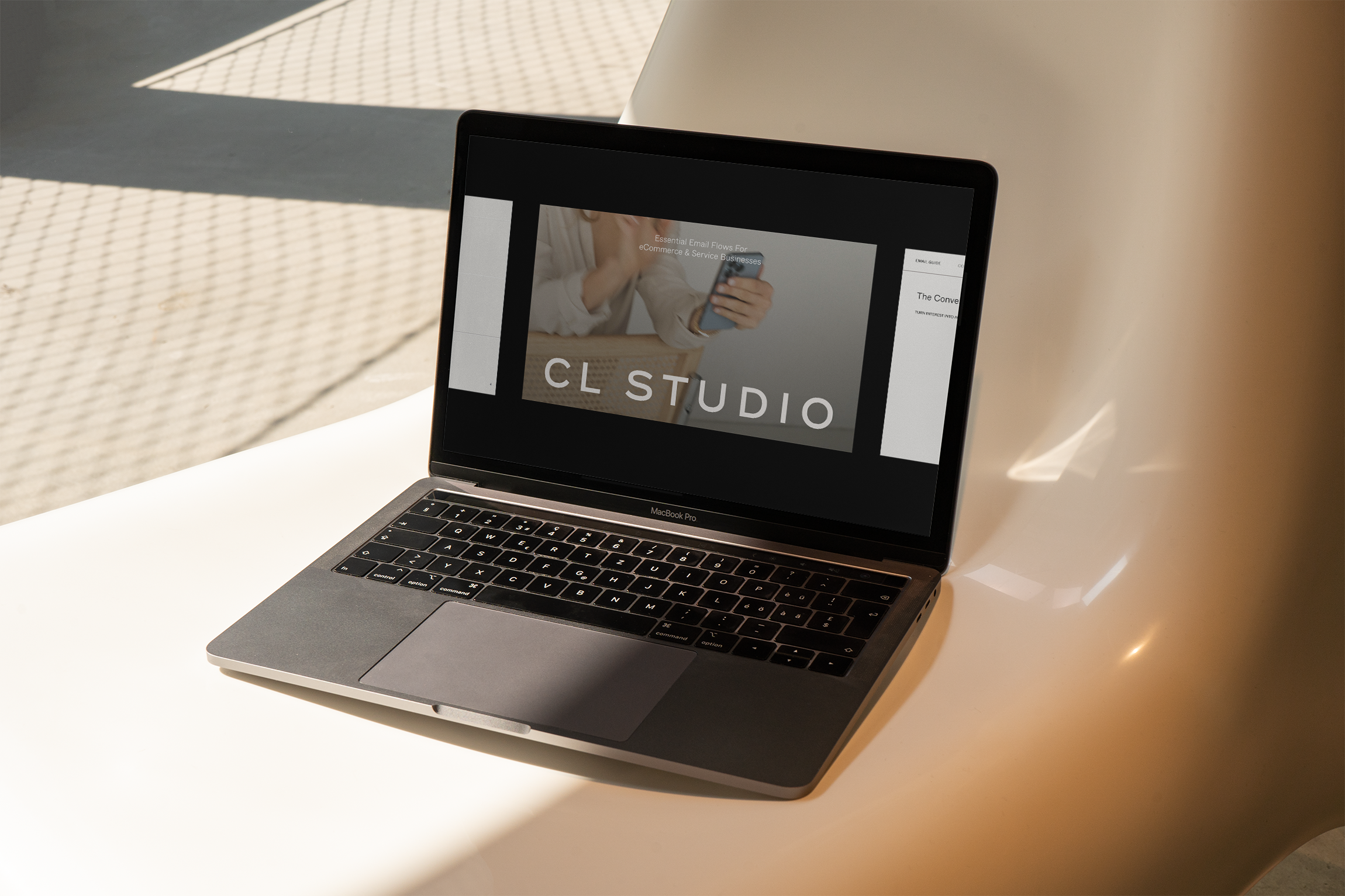
Stuck on where to even begin with your email strategy?
That’s why we created a free Essential Emails Guide for eCommerce and Service Businesses so you can review your messaging, design, and consistency with clarity and confidence, and start making improvements that actually move the needle.
So Which Should You Choose?
Here's the short version.
If you run an eCommerce brand or a product-based business on Shopify and want to squeeze every dollar out of behavioral email marketing , use Klaviyo. The investment in learning the platform pays back significantly in revenue from well-built flows.
If you run a service-based business, creative agency, coaching practice, or personal brand and you want emails that look beautiful without a technical learning curve , use Flodesk. The flat-rate pricing is especially advantageous as your list grows.
If you're brand new to email marketing and want to start for free before committing to a paid platform , Mailchimp's free tier is a reasonable place to start. Just know you may outgrow it sooner than expected.
The Platform Matters Less Than What You Send
No platform will fix emails that aren't relevant, well-designed, or aligned with your brand. The best email marketing strategy is one you'll actually execute consistently , which means choosing a platform you understand and enjoy using.
At CL Studio, we design email marketing templates and flows across Klaviyo, Flodesk, and Mailchimp. If you need help building an email presence that looks and performs like your brand, let's talk.

Hi there! I’m so glad you found us in this corner of the internet.
I'm Chloe Leonard, the founder of CL Studio, a boutique creative agency based in Nashville, TN. After 10 years of working with hundreds of clients, including Almost 30 Podcast, Clearstem Skincare, Harper Collins, and Free People, I've become more passionate than ever about giving founders the clarity and tools to build brands that TRULY stand out.
We help service-based and eCommerce businesses move from DIY beginnings to fully realized brands — built with confidence and longevity in mind. Because good brands show up, but great brands own the room for years to come.