
How to Choose a Branding Partner for Your Wellness Business
By Chloe Leonard, Founder of CL Studio
Choosing a branding partner is one of the most important decisions you'll make for your wellness business. And yet most people go into the process with no real framework for it. They scroll through Instagram, find someone with a beautiful portfolio, and book a discovery call. Sometimes that works out. Often it doesn't.
The problem isn't a lack of talented designers or consultants. The wellness space is full of them. The problem is that "beautiful work" and "right fit for your business" are two completely different things, and most people treat them like they're the same.
Here's how to actually evaluate a branding partner before you commit.
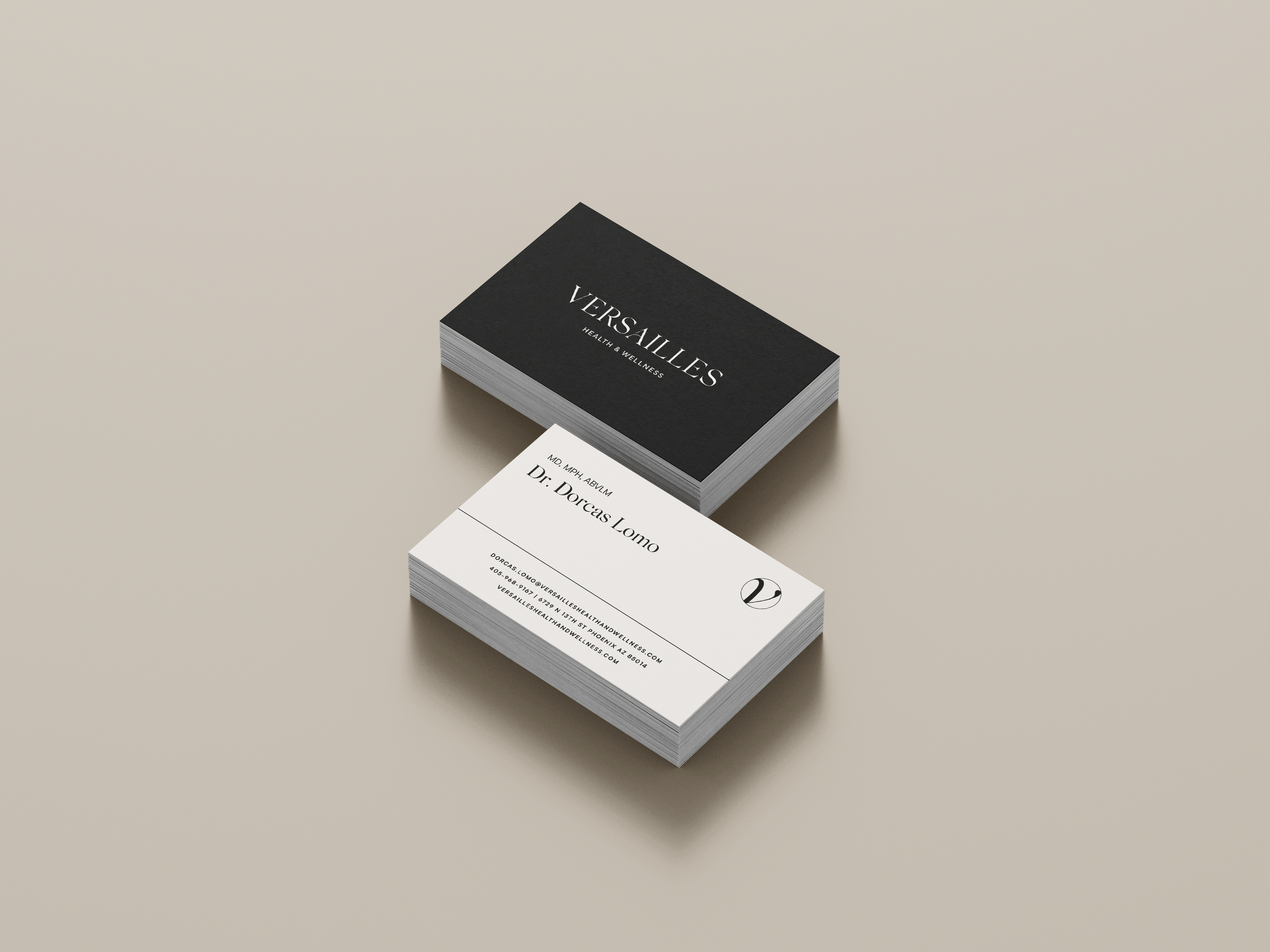
Branding for a Texas-based health & wellness center, Versailles Health & Wellness
Understand What You're Actually Buying
Before you can choose the right partner, you need to be clear on what you need. Branding is not just a logo. It's the full system of how your business is perceived: your visual identity, your voice, the feeling someone gets when they land on your website or open your email.
Some branding partners offer strategy and positioning. Others offer execution only. Some do both. Knowing which you need changes everything about who you should hire.
If you're early stage and still figuring out who your ideal client is, you need a partner who does positioning work, not just design. If you're already clear on your brand story and just need someone to bring it to life visually, a strong design-focused studio might be exactly right.
Ask yourself: Do I know what my brand stands for, or do I need help figuring that out? Your answer will narrow the field significantly.
Look at Their Wellness Industry Experience
This one matters more in wellness than in most other industries. Wellness brands carry a specific kind of weight. They're often rooted in personal stories, values-driven, and deeply tied to trust. The wrong visual direction or the wrong tone can make a health brand feel clinical when it should feel warm, or trendy when it should feel timeless.
A branding partner who works exclusively in e-commerce or tech can be brilliant at what they do and still miss the mark completely for a wellness client. Look for someone who understands the nuances: the difference between a supplement brand and a wellness coaching practice, the way that fonts and color carry emotional signals that matter more in this category than in others.
You don't necessarily need someone who has only worked with wellness brands, but you do want evidence that they get it. Look at their portfolio with a critical eye. Does the work feel right? Does it look like the kind of brand you want to build?
Ask About Their Process, Not Just Their Output
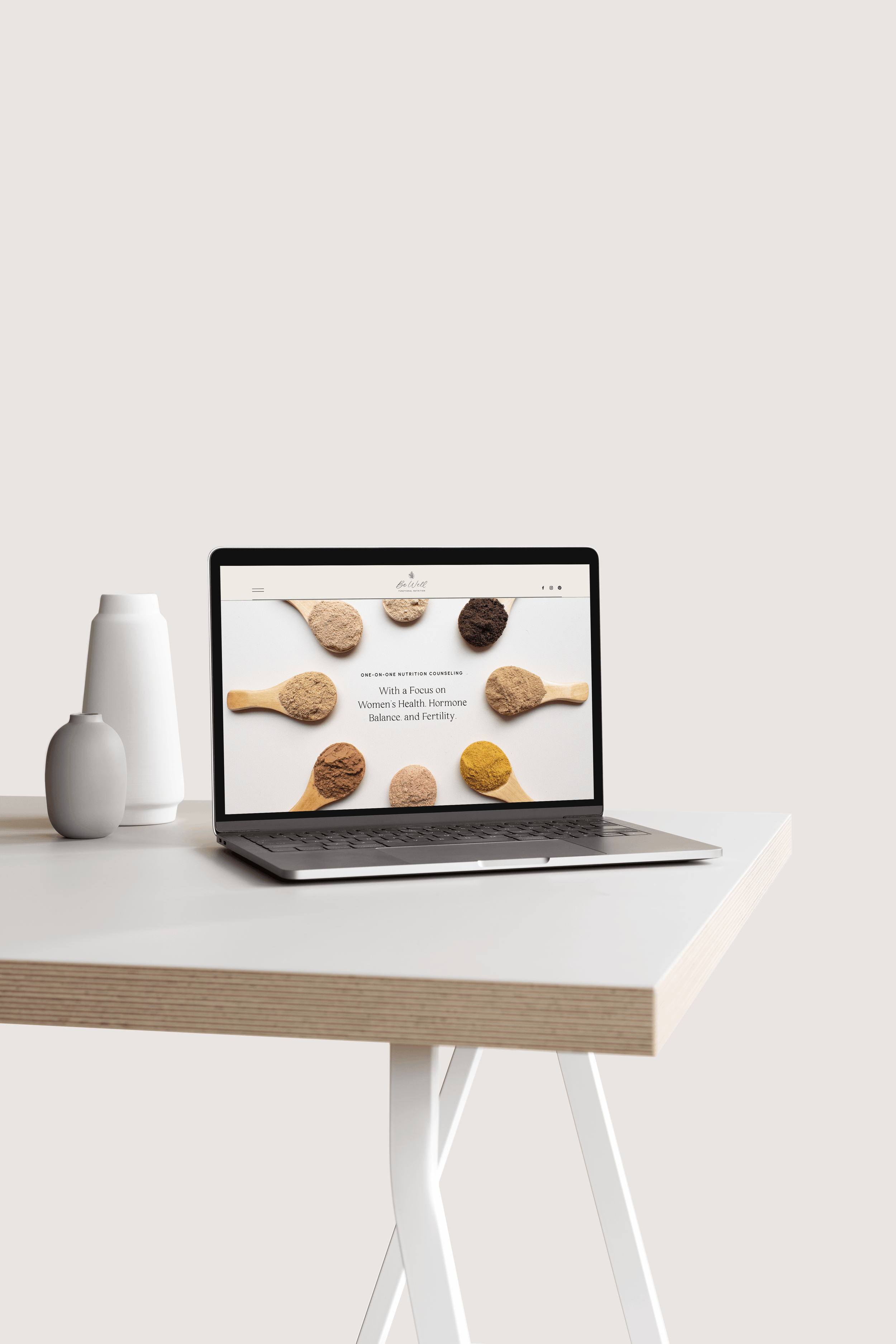
Branding & Web Design for a nutrition and health coaching brand, Be Well Functional Nutrition
A good branding partner will have a defined process, and they'll be able to explain it to you clearly. This is important for two reasons: it tells you what you're actually getting, and it tells you how much of your own time and thinking will be required.
Some partners do a lot of upfront discovery work, which is a good sign. They want to understand your audience, your values, your competitors, and your goals before they touch any design. Others move straight to visuals. That can work if you've done the strategic work yourself, but it can also result in beautiful design that doesn't actually connect.
Questions worth asking on a discovery call:
How do you get to know a brand before you start designing?
What does your process look like from start to finish?
How many revision rounds are included?
Who else on your team might work on my project?
What do you need from me to do your best work?
If they struggle to answer these or give vague responses, that's information worth paying attention to.
Check References, Not Just Testimonials
Testimonials on a website are curated. References are not. Before signing any contract, ask for one or two past clients you can speak with directly. A good partner will have no hesitation offering this.
When you speak with references, ask about the things that don't show up in a portfolio: Were timelines met? How did they handle feedback? Did the deliverables actually get used, or did something fall short? Would they hire them again?
These conversations take maybe 20 minutes and can save you months of frustration.
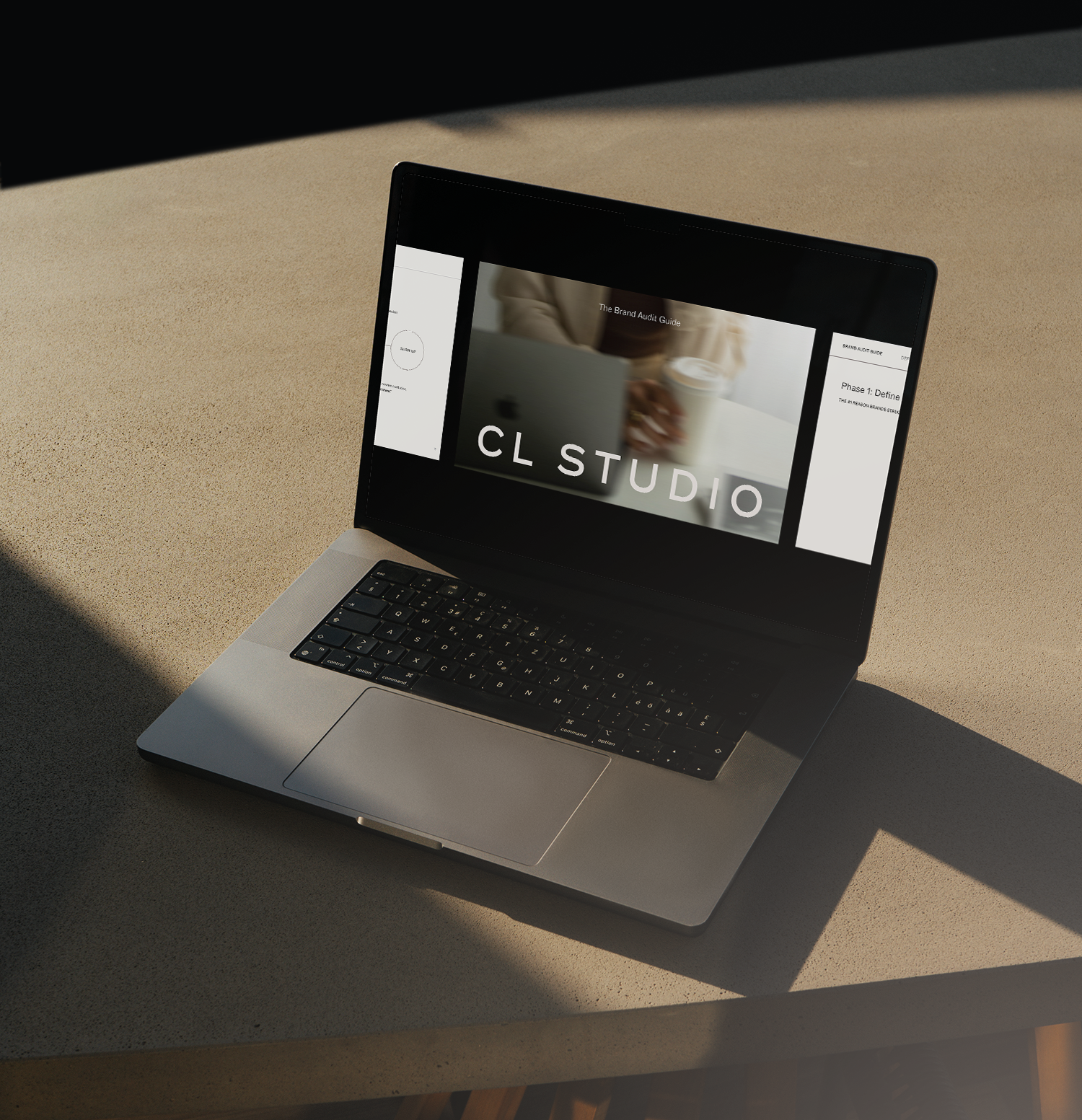
Download Our Free Brand Audit Guide
Feel like your brand is missing the mark? Not sure where to start. As a creative agency for almost a decade, we know where a brand needs a little TLC. That’s why we created the free brand audit guide so you can take your brand consistency, alignment, and look into your own hands.
Know the Difference Between a Freelancer, a Consultant, and an Agency
The title someone uses to describe themselves tells you something about how they work.
A freelance designer is typically one person doing the execution. This can be a great fit if you want close collaboration and a lower price point, but capacity and bandwidth can be a constraint.
A branding consultant usually brings a more strategic lens. They often help you think through positioning, messaging, and brand architecture before the design work begins. They may bring in a designer or do the visual work themselves.
An agency offers a team, which means more capacity and often more specialization, but also a higher price point and sometimes less direct access to the senior talent you saw in the portfolio.
None of these is inherently better than the others. The right fit depends on the scope of your project, your budget, and how you like to work.

Founder, Chloe Leonard, working on a branding for a wellness brand.
Pay Attention to How They Communicate Before You Hire Them
This sounds obvious, but it gets overlooked. The way a potential partner communicates during the sales process is almost always a preview of how they'll communicate during the project.
Do they respond promptly? Do their emails feel thoughtful or rushed? Do they ask good questions about your business, or do they jump straight to pitching their packages?
Branding projects require a lot of back-and-forth. You'll be sharing opinions, giving feedback, and sometimes pushing back on ideas. If communication feels off from the start, it rarely improves once the contract is signed.
Don't Make Price Your Primary Filter
Of course budget matters. It's a real constraint and there's no point pretending otherwise. But choosing a branding partner based primarily on price is one of the fastest ways to end up with something you don't love and have to redo in a year (Can’t stress this enough - I can’t tell you how many clients have come to me after investing in branding a year ago and then wanting to redo it because it’s not backed by strategy.)
A lower price point often means fewer strategy touchpoints, less discovery work, or a partner who's newer to the industry. That's not always bad, but it's worth knowing what you're trading for the savings.
The better question to ask isn't "who is the most affordable?" but "who will get me the outcome I actually need, and what's the minimum I should invest to get there?" Sometimes those numbers line up. Sometimes they don't. But framing it this way helps you make a clearer decision.
Trust Your Gut, But Verify It
After you've done the research, checked the process, spoken to references, and compared proposals, there's still an intangible element: do you trust this person? Do you feel like they actually understand your business and care about the outcome?
That feeling matters. Branding is a collaborative process and you'll be sharing a lot of yourself, your story, your vision, in the work. You want a partner who handles that with care.
But trust your gut after doing the work, not instead of it. The best partnerships usually have both: a solid process and a genuine connection.
If you're still early in the process of figuring out what kind of branding support your wellness business needs, this post on branding for health and wellness businesses is a good place to start.
Working with the right branding partner changes everything — reach out to explore what that could look like for your wellness business.

Hi there! I'm so glad you found us in this corner of the internet.
I'm Chloe Leonard, the founder of CL Studio, a boutique creative agency based in Nashville, TN. After 10 years of working with hundreds of clients, including Almost 30 Podcast, Clearstem Skincare, Harper Collins, and Free People, I've become more passionate than ever about giving founders the clarity and tools to build brands that TRULY stand out.
We help service-based and eCommerce businesses move from DIY beginnings to fully-realized. brands – built with confidence and longevity in mind. Because good brands show up, but great brands own the room for years to come.