
How to Name Your Med Spa: What Your Name Is Already Telling Clients
When you were naming your med spa, you were probably thinking about what sounded professional, what was available as a domain, and maybe what felt personal to you or your practice. What most practice owners are not thinking about in that moment is what the name communicates to a stranger who has never heard of you.
Your name is the first brand decision you ever make. It runs across every touchpoint your clients encounter: the Google search result, the Instagram handle, the email subject line, the referral recommendation at a dinner party. Before someone ever sees your website or your before and afters, the name alone is already shaping their expectations about what kind of practice you are, what it costs, and whether it is for someone like them.
Most med spa names are unintentional in ways that quietly cost the practice. As a branding agency for small businesses for ten years, working with med spas from all over the country, here is how to think about it more deliberately.

Download Our Free Brand Audit Guide
Feel like your brand is missing the mark? Not sure where to start. As a creative agency for almost a decade, we know where a brand needs a little TLC. That’s why we created the free brand audit guide so you can take your brand consistency, alignment, and look into your own hands.
The Three Naming Traps Most Med Spas Fall Into
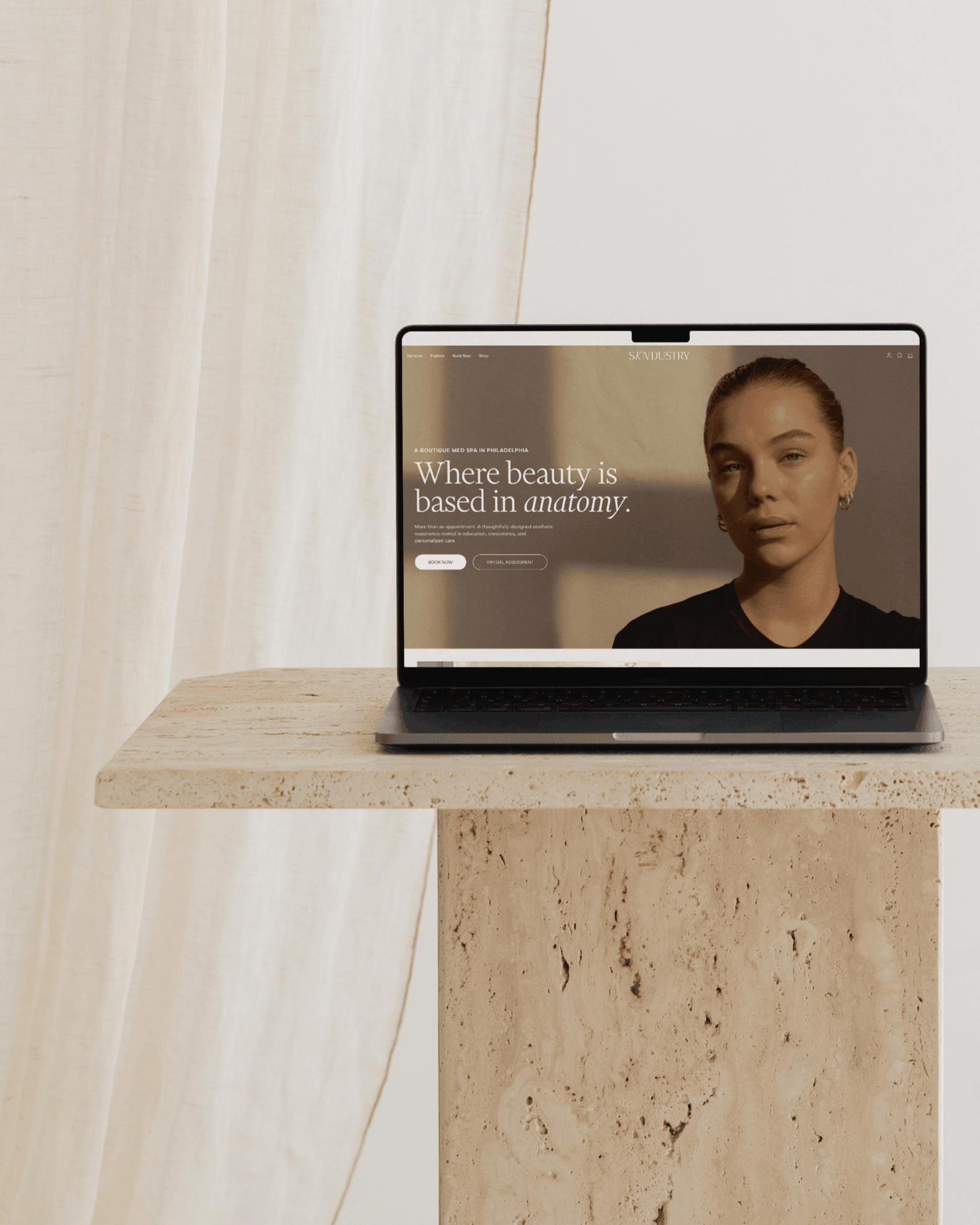
The Too Clinical Name - Names like Advanced Medical Aesthetics, Elite Dermatology Group, or Precision Skin Institute sound credentialed and serious, which is not necessarily wrong. But in a category where clients are also looking for experience, warmth, and a sense of elevated personal care, names that read like hospital departments can signal cold and transactional rather than clinical and trustworthy. If your positioning is high-touch luxury, a name that sounds like a billing department works against you.
The Too Cutesy Name - On the other end: names built around words like glow, bloom, radiance, luxe, or divine. There are thousands of med spas with some version of these words in their name. They are not wrong exactly, but they are so common that they have lost all distinguishing power. When a client searches for you and finds three other practices with nearly identical names in the same city, your name is working against your discoverability and your memorability at the same time.
The Too Geographic Name - Nashville Medical Spa. Scottsdale Aesthetics. Chicago Skin Studio. These names make local SEO slightly easier in the short term, but they create real problems as a practice grows. They signal generic rather than specialist. They become awkward if you expand or move. And they do not give a client any feeling for what makes you different from every other practice in that city.
What Your Name Signals About Price Point
This is something most naming guides skip entirely, but it matters enormously in medical aesthetics. The linguistic and visual weight of a name shapes expectations about pricing before a client knows a single thing about your services.
Names with hard consonants, short syllables, and clean structure tend to read as premium: Vela, Aurum, Sora, Revere, Luma. They are easy to say, easy to remember, and they leave visual room for a refined logo and identity.
Names that are long, compound, or heavily descriptive tend to signal mid-market: The Aesthetics and Wellness Center of Nashville, Complete Skin Solutions, Total Body Medical Spa. Not bad, but they do not build anticipation the way a simple, considered name does.
This matters because your pricing has to feel consistent with your brand at every touchpoint. If you are charging premium prices but your name feels mid-market,clients arrive with a mismatch in expectations, and that friction shows up in how they respond to your treatment menu and your fees.

Real Examples of Names That Work and Why
Practitioner-led names done well: Names like Dr. Sarah Cole Aesthetics or Cole Skin Studio work when the practitioner is the differentiator. This approach builds personal authority and makes the provider the brand, which is powerful for retention and referrals. The risk is that it limits scalability and makes the practice harder to sell or transition later.
Evocative single-word names: Names like Forme, Sana, Vela, or Alara are short, distinctive, and brand-well visually. They carry no baggage and can mean whatever you build them to mean through your positioning. They are harder to come up with but pay off over time.
Concept names with staying power: Names built around a clear concept your ideal client already aspires to, like Revive, Renew, Restore, work when the execution is distinctive. The challenge is that these words are popular. If you go this route, the visual identity and positioning need to do additional work to make the name feel specific to your practice rather than generic to the industry.
How to Test Whether Your Name Is Working
Before you commit to a name (or before you accept that your current name is fine), run it through these questions.
Can someone spell it correctly after hearing it once? If your name requires explaining or spelling out every time you say it on the phone, that is friction in every conversation and every referral.
Does it travel well in a sentence? "I go to Vela" lands differently than "I go to Advanced Medical Aesthetics and Wellness." The first one sounds like a recommendation. The second sounds like a phone directory listing.
Does it give you room to grow? A name built entirely around one treatment or one location becomes a liability the moment your focus shifts.
Does it attract the client you want? Show the name to ten people who match your ideal client profile. Not friends, not colleagues. People who actually represent the demographic you are trying to reach. What does it make them feel? What do they assume about the pricing? That feedback is more valuable than any internal debate about what sounds good.
More importantly: has it already been trademarked or no?
What to Do If Your Current Name Is Not Working
If you have been in practice for several years, you have built equity in your current name even if it is not ideal. Rebranding is not always the answer. Sometimes the name is fine and what is actually needed is a stronger visual identity, clearer positioning language, and a brand that makes the name feel intentional.
If the name is actively working against you, if it is too generic to differentiate you, too clinical to attract the clients you want, or too tied to a direction your practice has moved away from, then a rebrand is worth considering seriously. The investment is real, but so is the cost of a name that sends the wrong message to every new client who finds you.
Frequently Asked Questions
What makes a good med spa name?
The best med spa names are short, easy to say, easy to spell, and visually brandable. They leave room for a refined identity to build around them, and they do not box the practice into a single treatment, location, or price tier. Most importantly, they attract the client you actually want to work with.
Should I use my own name for my med spa?
Practitioner-led names build strong personal authority and can be very effective, especially in the early years of a practice. The tradeoff is scalability. If you ever want to bring on additional providers, expand to a second location, or eventually sell the practice, a name built entirely around your identity creates complications. Consider whether the long-term business model fits that structure before committing.
How do I know if my med spa name is too generic?
Search your name alongside your city on Google. If multiple competitors have similar names and there is nothing in the name itself that distinguishes your practice, that is a signal. You can operate with a generic name if everything else about your brand is strong, but you will always be working harder to stand out than a practice with a more distinctive name.
Can I rename my med spa after I have already launched?
Yes. It requires a plan, clear communication to your existing clients, and updated branding across every touchpoint, but practices rebrand successfully all the time. The key is not to do it halfway. A new name with the old visual identity, or a new name announced without explanation, creates more confusion than it resolves. If you are going to rename, do it with intention and do it completely.

Hi there! I’m so glad you found us in this corner of the internet.
I'm Chloe Leonard, the founder of CL Studio, a boutique creative agency based in Nashville, TN. After 10 years of working with hundreds of clients, including Almost 30 Podcast, Clearstem Skincare, Harper Collins, and Free People, I've become more passionate than ever about giving founders the clarity and tools to build brands that TRULY stand out.
We help service-based and eCommerce businesses move from DIY beginnings to fully realized brands — built with confidence and longevity in mind. Because good brands show up, but great brands own the room for years to come.