
What Your Interior Design Website Tells Luxury Clients
You have the portfolio. You have the experience. You have done beautiful work for clients who were thrilled with the results. And yet the inquiries coming in do not quite match the caliber of project you are trying to attract. The budgets are lower than you want. The scope is smaller. The clients are the ones who push back on your process.
Here is the thing most designers do not want to hear: if this is your situation, your website is probably part of the problem.
If there’s one thing we’ve learned in our ten years of business as a boutique web design agency for interior designers, high-end clients (who are not referrals) do not take a lot of time to decide whether a designer is worth reaching out to because they form an impression in seconds. And if anything on your site signals the wrong thing about who you are, what you charge, or who you typically work with, they will leave before you ever get the chance to show them what you can do.
Here is what they are picking up on, whether you realize it or not.
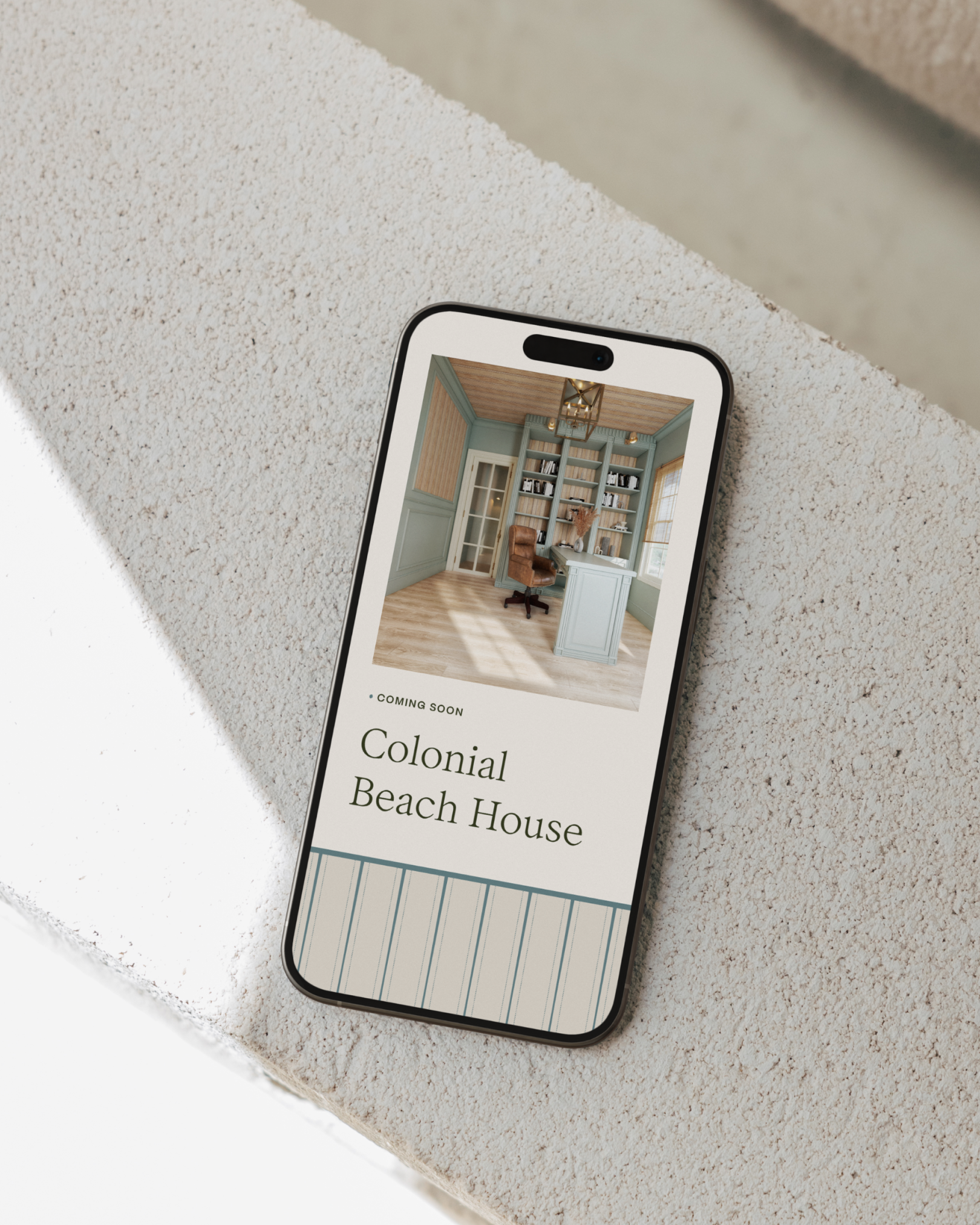
Your Portfolio Order Tells Them Who You Work With
Most designers organize their portfolio chronologically, or by whatever project they finished most recently. The problem is that the first project a visitor sees becomes their anchor for everything else on your site. If your most recent work is a small apartment refresh and your ideal project is a full custom home build, you are starting the conversation in the wrong place.
The designers who consistently attract high-end clients lead with their most aspirational work, not their most recent, not their most personally meaningful, but the project that best represents the client they want to attract next. If you have one extraordinary project buried four scrolls deep on your portfolio page, that project needs to be the first thing someone sees.
Your Inquiry Form Is Doing the Opposite of What You Think
Most designer websites have a contact form that looks something like this: name, email, message, submit. The intention is to keep it easy and approachable. The reality is that it signals something unintentional: you have no selection process.
High-end clients are not just evaluating whether they can afford you. They are evaluating whether you are the kind of designer who works with clients like them. A vague contact form does not create that impression. A thoughtful intake form does. Asking about project scope, timeline, and budget range before a call does not scare off good clients. It signals that your time is valuable, that you have a process, and that you work with people who are serious. That is exactly what luxury clients want to see.
What Your Pricing or Process Page (or Lack of One) Is Communicating
This one is nuanced but important. If your website has no mention of pricing or process, investment levels, or how you structure your fees, high-end clients tend to fill in that gap themselves, and they usually fill it in the wrong direction. They either assume you are too affordable to be worth their budget, or they assume you are disorganized about your business, neither of which is the impression you want.
You do not need to publish a full rate card, but some signal of your positioning and unique process matters. Phrases like "projects typically start at" or "we work with clients investing in full-scale residential design" do the quiet work of filtering your inquiries without requiring you to publish a price list. It tells the right client they are in the right place, and it tells the wrong client they are probably not, which saves everyone time.
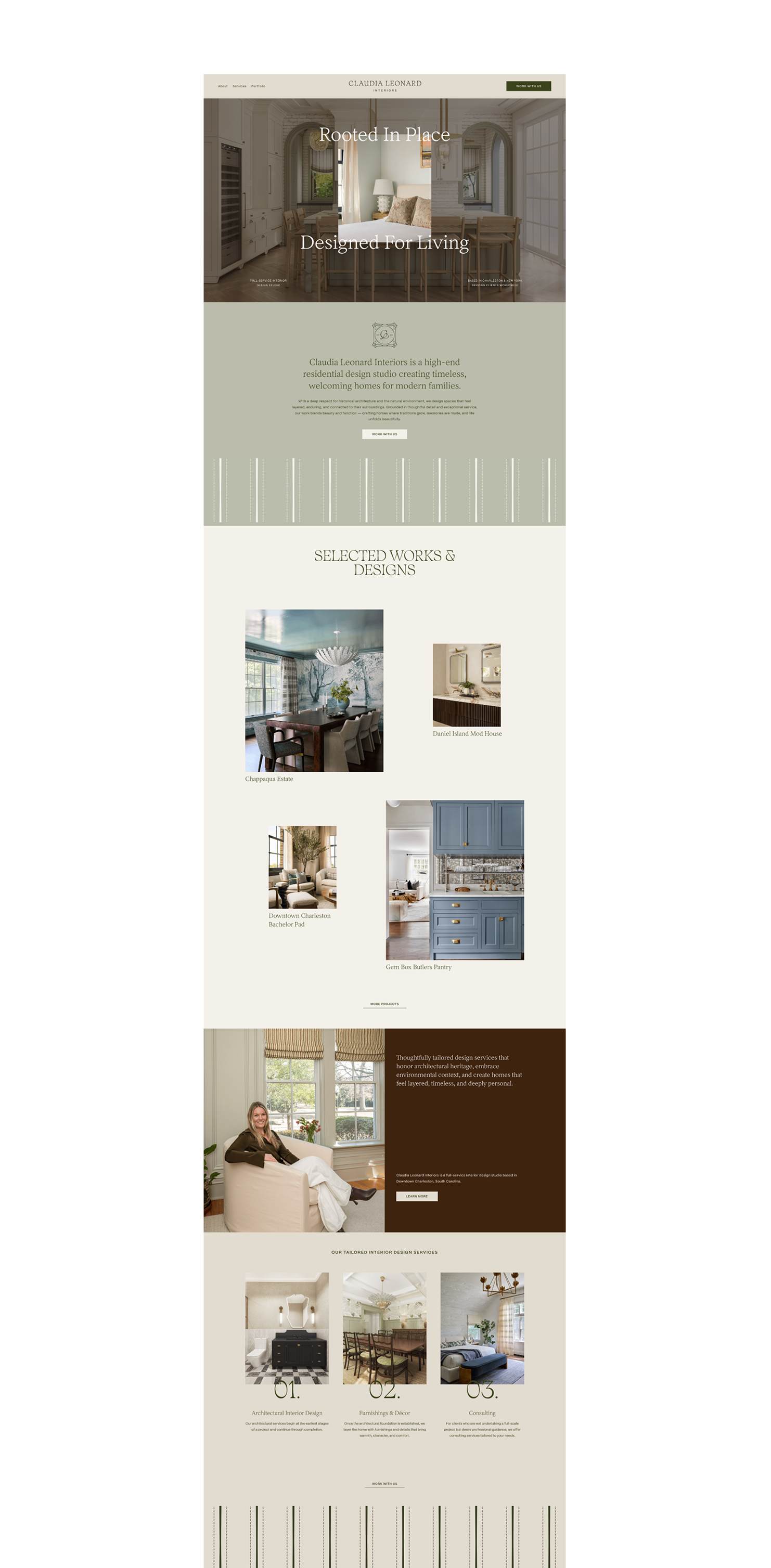
They Are Running a 10-Second Test You Do Not Know About
Before a luxury client reads a single word on your website, they are running a visual assessment. Does this feel expensive? Does it feel considered? Does it feel like someone with taste built this, or like someone who picked what’s in trend based on Crate & Barrel’s catalog and called it done?
This is not about having the most elaborate website. Some of the most effective interior designer websites are remarkably simple. What they have in common is visual intentionality: a font pairing that feels elevated, a color palette that does not fight the portfolio photography, white space that gives the work room to breathe, and imagery that looks like it belongs in a magazine rather than a showroom brochure. The website design itself is a signal about your aesthetic sensibility. If your site looks like it was thrown together, clients assume your process is too.
Your Photography Quality Is Doing the Heavy Lifting
As much as people like to believe it, no amount of good copy or thoughtful layout can save a portfolio built on mediocre photography. Luxury clients are hiring you to make things beautiful. If your portfolio images are dark, slightly blurry, shot on an iPhone, or styled in a way that does not show the space at its best, you are working against yourself before anyone reads a word.
Professional architectural and interior photography is a real investment. It is also one of the highest-leverage investments a designer can make in their marketing. One extraordinary shoot of one extraordinary project can anchor your entire portfolio and change the caliber of inquiry you receive overnight.
If you are not in a position to reshoot everything, start with one room from your best project. Get it shot beautifully. Make it the first thing on your portfolio page. The difference in how your site reads will be immediate.
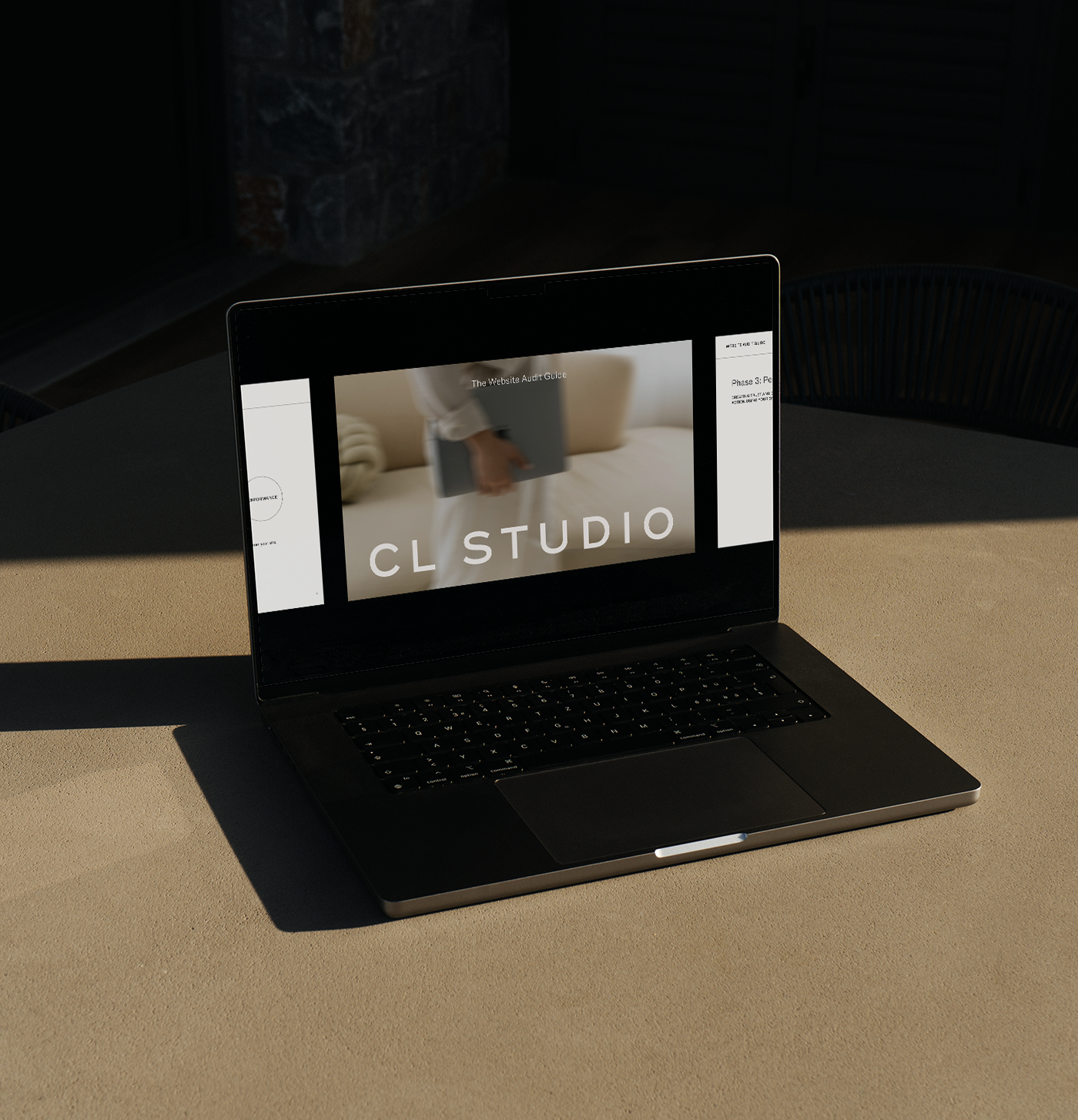
Not sure what your website is actually communicating to the people who visit it? Our free Website Audit Guide walks you through the exact criteria high-end clients are using to evaluate designers before they ever reach out. Download it here and run the assessment yourself before your next site update.
A great interior design practice deserves a website that reflects the quality of the work behind it. If yours is not doing that yet, that is worth taking seriously.
Want more hands-on support with your website?
Get a full Brand & Website Audit delivered in 5 business days so you can stop guessing, and start fixing.
→ Limited Spots Available!

Frequently Asked Questions
Do interior designers need a professional website?
Yes, and more than most service businesses. Interior design is a visual discipline and clients are making an aesthetic judgment about you before they make a financial one. A DIY or templated website that does not reflect your design sensibility sends a conflicting message before you ever get on a call.
How do I attract luxury clients as an interior designer?
Start with your portfolio. Lead with your most aspirational work, not your most recent. Then look critically at your inquiry process, your visual presentation, and whether your site communicates that you have a selective, considered practice. Luxury clients are attracted to designers who appear to have standards, not just skills.
Should I put pricing on my interior design website?
You do not need a full rate card, but some signal of your investment level matters. Consider language like "projects typically begin at" or a general description of the scope you work with. This filters your inquiries and signals to high-end clients that you are clear and professional about how you run your business.
How often should I update my interior design website?
Any time you complete a project that is stronger than what is currently leading your portfolio, it is worth updating. Beyond that, an annual review of your copy, photography, and overall positioning keeps your site aligned with where your practice is now, not where it was two years ago.

Hi there! I’m so glad you found us in this corner of the internet.
I'm Chloe Leonard, the founder of CL Studio, a boutique creative agency based in Nashville, TN. After 10 years of working with hundreds of clients, including Almost 30 Podcast, Clearstem Skincare, Harper Collins, and Free People, I've become more passionate than ever about giving founders the clarity and tools to build brands that TRULY stand out.
We help service-based and eCommerce businesses move from DIY beginnings to fully realized brands — built with confidence and longevity in mind. Because good brands show up, but great brands own the room for years to come.