
How to Write Website Copy That Converts (Even If You Hate Writing)
By Chloe Leonard, Founder of CL Studio
Most websites fail not because of bad design. They fail because of bad copy.
You can have the most beautiful website in your industry and still have a conversion rate of zero if the words on the page aren't doing their job. Copy is the engine. Design is the vehicle.
The good news: you don't have to be a born writer to write copy that converts. You just need a framework.
What 'Converting' Actually Means
Before we talk about how to write converting copy, let's define what we mean. 'Converting' means the visitor takes the action you want them to take. For most service-based businesses, that means booking a call, filling out an inquiry form, or making a purchase.
The copy on your website should be designed to move the visitor toward that action, not just inform them, not just impress them, but persuade them to take the next step.
The Most Important Copy on Your Website
The Headline
The first thing a visitor sees on your homepage determines whether they stay or leave. It has one job: make them want to keep reading. We’ve found as a web design agency for small businesses that a great headline speaks directly to what the visitor wants or the problem they're trying to solve.
Not: 'Welcome to [Your Business Name].' That tells them nothing.
Better: 'Strategic Branding for Small Businesses Ready to Be Taken Seriously.' That speaks to the outcome, the audience, and the positioning all at once.
The Above-the-Fold Section
Everything the visitor sees before they scroll should answer: who is this for, what does it do for me, and why should I trust this person? You have about 5 seconds to make this case before they bounce.
The Services Section
Don't just list what you offer. Describe what it does for the client. 'Brand Identity Design' is a feature. 'A brand that makes your ideal clients stop scrolling and start buying' is a benefit. Lead with benefits.
The About Page
Your about page isn't about you. It's about what you can do for the client. Yes, tell your story, but connect it to why that makes you uniquely qualified to solve their problem.
The Call to Action
Every page should have one clear CTA. Not three. Not five. One. And it should tell the visitor exactly what to do: 'Book a Discovery Call,' 'Start Your Project,' 'View Our Work.' Be specific and direct.
A Framework for Writing Copy That Works
Start with the reader, not with you. What does your ideal client want? What are they afraid of? What have they tried that hasn't worked? Lead with their world, then introduce your solution.
Use plain language. The goal is to be understood, not to sound impressive. If you can say something in 10 words instead of 20, say it in 10.
Write the way you speak. Read your copy out loud. If it sounds stiff or formal in a way that doesn't match how you actually talk to clients, rewrite it.
Tell them what to do next. People need to be told. Don't assume they'll figure out how to contact you, make it obvious and make it easy.
What to Avoid
Jargon and industry speak. Your clients probably don't use the same terminology you do. Write at the level of your audience.
Talking about yourself too much. 'I' and 'we' should appear far less than 'you' on your website.
Burying the CTA. Every important page should have a CTA above the fold and at least one more at the bottom.
download the free guide
Not sure if your website is working as hard as it should be?
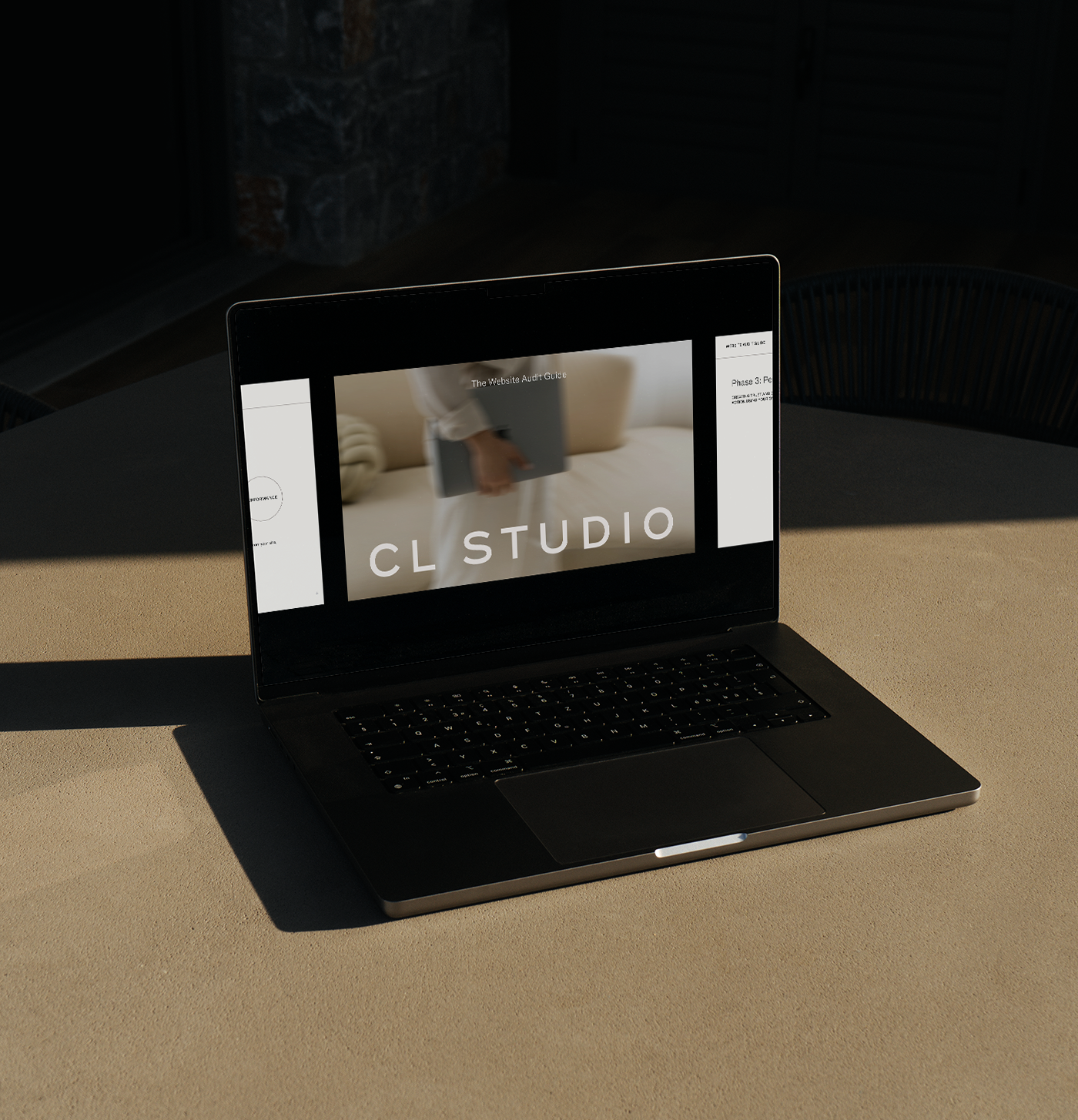
After nearly a decade of specializing in web design for small businesses, we know exactly where things tend to fall apart. That’s why we created our free website audit guide, to help you quickly spot what’s working, what’s not, and where to focus next.
→ Want our team to personally look at your website and give it a full audit? Book your audit here!

Hi there! I'm so glad you found us in this corner of the internet.
I'm Chloe Leonard, the founder of CL Studio, a boutique creative agency based in Nashville, TN. After 10 years of working with hundreds of clients, including Almost 30 Podcast, Clearstem Skincare, Harper Collins, and Free People, I've become more passionate than ever about giving founders the clarity and tools to build brands that TRULY stand out.
We help service-based and eCommerce businesses move from DIY beginnings to fully-realized. brands – built with confidence and longevity in mind. Because good brands show up, but great brands own the room for years to come.