
Personal Brand vs Business Brand: Which One Should You Build?
By Chloe Leonard, Founder of CL Studio
If you are building something of your own, you have probably asked yourself this question at some point: should I build a personal brand or a business brand? And which one will actually help me get to where I want to go?
The answer isn’t about starting on top of trends, social media algorithms, or what everyone else seems to be doing. It’s about alignment.
The right choice for you depends on
how you work
how you want to grow
what kind of relationship you want with your audience
From my own experience working for years as a solopreneur building my own branding agency for small businesses, I struggled to understand the difference myself. How I presented myself to clients and how I presented myself to the world online felt disconnected and unaligned for a while. But eventually, after answering these questions, I found answers. We’ll unpack what the answers to these questions mean for you and your own unique brand goals specifically. Because let’s face it, your brand can be business and it can be personal.
A Personal Brand Starts with You
Let’s talk about what makes a personal brand unique: YOU.
A personal brand starts with the face, voice, and personality of your business, but your story, values, and perspective are front and center. This gives the audience a clear path to getting to know you and what your brand represents.
Your audience will be buying into your expertise and your unique perspective just as much as the services you offer. That being said, personal brands tend to work beautifully for coaches, consultants, creatives, educators, and founders whose work is deeply tied to their lived experience.
The trust comes from visibility, connection, and relatability, but growth is often tied directly to your capacity and presence.

For example, take Jenna Kutcher. First of all, her name is her brand, so that should give away that it’s a personal brand right off the bat (another contrasting example of that in a second).
Second, her audience is primarily connected to her identity, story, values, and lived experiences, not just a single product, service, or company offering. Her content, messaging, and business ecosystem consistently center around her life journey, from her career transitions and entrepreneurship to motherhood, wellness, and personal growth. This positions her as the product’s core vehicle of trust and transformation.
While she does sell courses, programs, and educational resources, they are extensions of her perspective and methodology rather than standalone branded entities that could easily exist without her.
The emotional connection her audience feels is tied to her relatability, transparency, and personality, which allows her to pivot offers, expand into new categories, and evolve her business without losing audience loyalty. In contrast to a business brand, which is typically built around a company identity, team, or service/product outcome independent of a founder, her brand equity lives within her voice, her story, and her authority, making her the central asset driving audience engagement, community, and revenue.
Does Using Your Name Make It a Personal Brand?
Now this is probably the most common question we get from our clients who are having trouble naming their businesses, especially for service providers.
The answer? No, it does not automatically make it a personal brand. BUT, it does require a certain level of clarification and intention for your audience so they don’t get confused.
For example, let’s take my business, Chloe Leonard Studio AKA CL Studio! I decided to name it Chloe Leonard Studio instead of something non-related to me like Grain Studio or Saffron Creative because I wanted to position it uniquely.
T
here are a lot of personal named businesses out
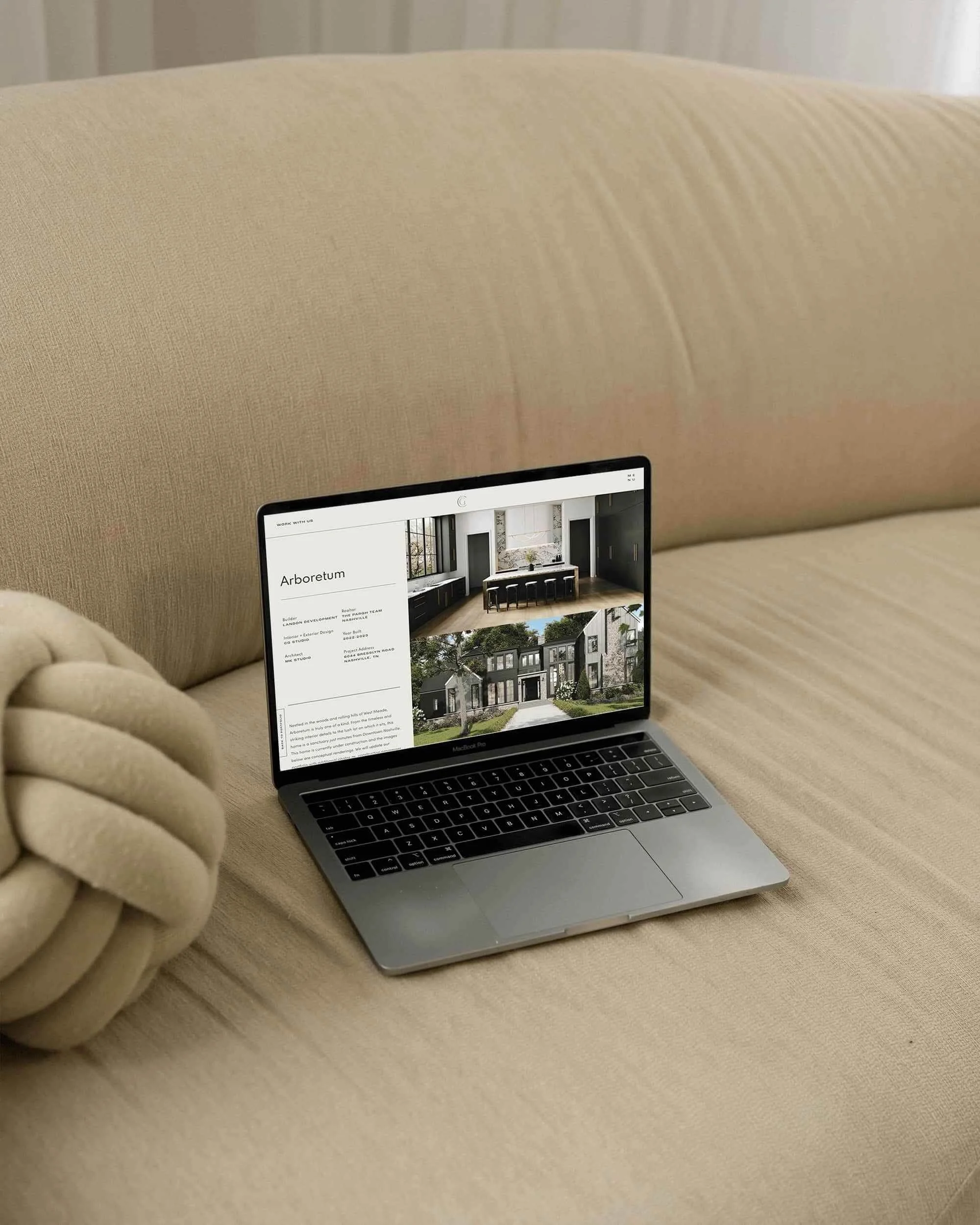
there for service providers like our client and luxury Nashville interior designer, CG Studio Interiors, or fashion brands like Jennifer Meyer Jewelry. When I see these names, it shows me that the person who runs it is the brand but there’s a deeper meaning as well. It’s what people associate with that name.
For CG Studio Interiors, it’s the founder Carli’s unique earthy meets modern design. For Jennifer Meyer Jewelry it’s the luxurious, feminine, and eclectic essence of the products.
So it’s not necessarily a personal brand, but it’s deciding that your name itself is associated with a type of product or service.
When Your Brand Needs to Stand on Its Own
Because a business-centered brand shifts the focus away from the individual, the brand stands on its own mainly because of a service or a product.
What does this mean exactly?
Outlining a clear mission.
Clear positioning.
A voice that transcends the idea of one person showing up every day.
For founders who want to scale, build a team, sell products, and eventually step back from their position, this is often the right path.
Business brands create structure, longevity, and flexibility, without having to show every aspect of your life to “sell”. The challenge here then becomes marketing the brand to still feel human and not generic.
When Personal and Business Lines Blur
Neither option is inherently better, but the real issue occurs when founders try to blend the two without a clear, set intention.
When this happens, brands start to feel unclear, messaging becomes inconsistent, and then the audience is not sure whether they are following a person or a company.
The result? Confusion that quietly erodes trust in your brand. Like I said before, it’s about being super intentional with what you want to communicate that your brand means to the audience or customer.
Where Personal Connection Meets Structure
There is a third option that many founders overlook that our creative agency for small businesses champions: while simultaneously building a strong brand business underneath it, you can market and lead with the style of a personal brand.
When you combine these two marketing strategies, this allows your brand to connect on a human to human level while creating strong systems of support that can grow beyond your initial impact.
The key is clarity around roles.
When people know why they are following you, what you uniquely bring to the table, and why exactly they should be hiring you or buying your product, the details that make up your brand work harder for you so that you don’t have to.
Choosing a Brand That Fits Your Future
Before choosing how you want to move forward, ask yourself honestly:
Do I want my business to rely on my personal presence long term?
Do I want to build something that can operate without me one day?
Do I feel more confident showing up as myself or letting the brand speak for me?
At CL Studio, we always start here. We define before we design.
Whether you’re building a personal brand, a business brand, or a thoughtful combination of both, we believe that success comes from alignment between who you are, what you offer, and where you are headed.
If your brand feels messy, unclear, or stuck between identities, it’s usually a sign that you need a better strategy. With the right strategy, it becomes an opportunity to build something that truly owns the room you want to be a part of. That’s where we come in.
As a boutique branding agency, CL Studio partners with founders who are ready to move beyond DIY solutions and build brands with intention, strategy, and staying power. We specialize in clarifying your positioning, refining your messaging, and translating your vision into a brand and website that feel aligned, confident, and built for growth.
Whether you are navigating the shift from personal to business branding or redefining how your brand shows up in the world, we are here to help you create something that truly owns the room.