
Branding for Nutritionists, Dietitians, and Wellness Coaches: Standing Out in a Crowded Feed
By Chloe Leonard, Founder of CL Studio
Scroll through “nutritionist” or “wellness coach” on Instagram for thirty seconds and you'll see it: the same sage green, the same overhead shot of a grain bowl, the same soft serif logo, the same "here for your journey" caption energy. If you're a nutritionist, dietitian, or wellness coach trying to build a practice right now, you already know this. You're not imagining the sameness, and it's exactly why a distinct brand is worth more in this field than in almost any other.
This post is about why that sameness happens, how to find what actually makes your approach different, and what a visual identity should look like once you know it from the lense of a branding agency for wellness businesses for nearly a decade.

Download Our Free Brand Audit Guide
Feel like your brand is missing the mark? Not sure where to start. As a creative agency for almost a decade, we know where a brand needs a little TLC. That’s why we created the free brand audit guide so you can take your brand consistency, alignment, and look into your own hands.
Why So Many Nutrition and Wellness Brands Look the Same
Most nutrition and wellness coaching businesses start the same way: someone builds an audience on social media first, then backfills a "brand" around it. That's not a knock. It's just how the industry has evolved, and it's a completely reasonable way to start.
The problem is that when everyone is building from the same starting materials (Canva templates, a handful of popular Pinterest moodboards, stock photography of smoothies and yoga mats), you end up with an entire industry that visually rhymes. Add in the fact that "wellness" as a category has its own unspoken aesthetic rulebook (terracotta, sage, cream, a script logo, soft rounded type), and you get hundreds of practices that are impossible to tell apart at a glance.
That sameness isn't just an aesthetic problem. It's a business problem. If your brand looks like everyone else's, a prospective client has no reason to choose you over the next nutritionist in their feed, except price. And price is the one lever you don't want to be pulling.
Finding Your Actual Point of Differentiation
Before any of that changes, you need to get honest about what actually makes you different, and "I really care about my clients" doesn't count. Every practitioner in your feed would say the same thing, and it's probably even true for most of them.
A real point of differentiation is specific. It's something a client could describe back to a friend. A few categories to dig into:
A specific philosophy or method. Not "balanced eating," but something with an actual point of view, like a metabolic-health-first approach, a non-diet framework, or a specific protocol you've built your practice around.
A specific client transformation. Not "helping people feel their best," but the exact before-and-after you're built to deliver, for the exact person who's living the "before."
A specific way of working. Group coaching versus 1:1. Fully virtual versus in-person. A 12-week container versus ongoing membership. How you work is often more differentiated than what you know.
A specific credential or lens. Clinical training, a specialty (PCOS, sports nutrition, disordered eating recovery, prenatal), or a personal story that shaped your approach.
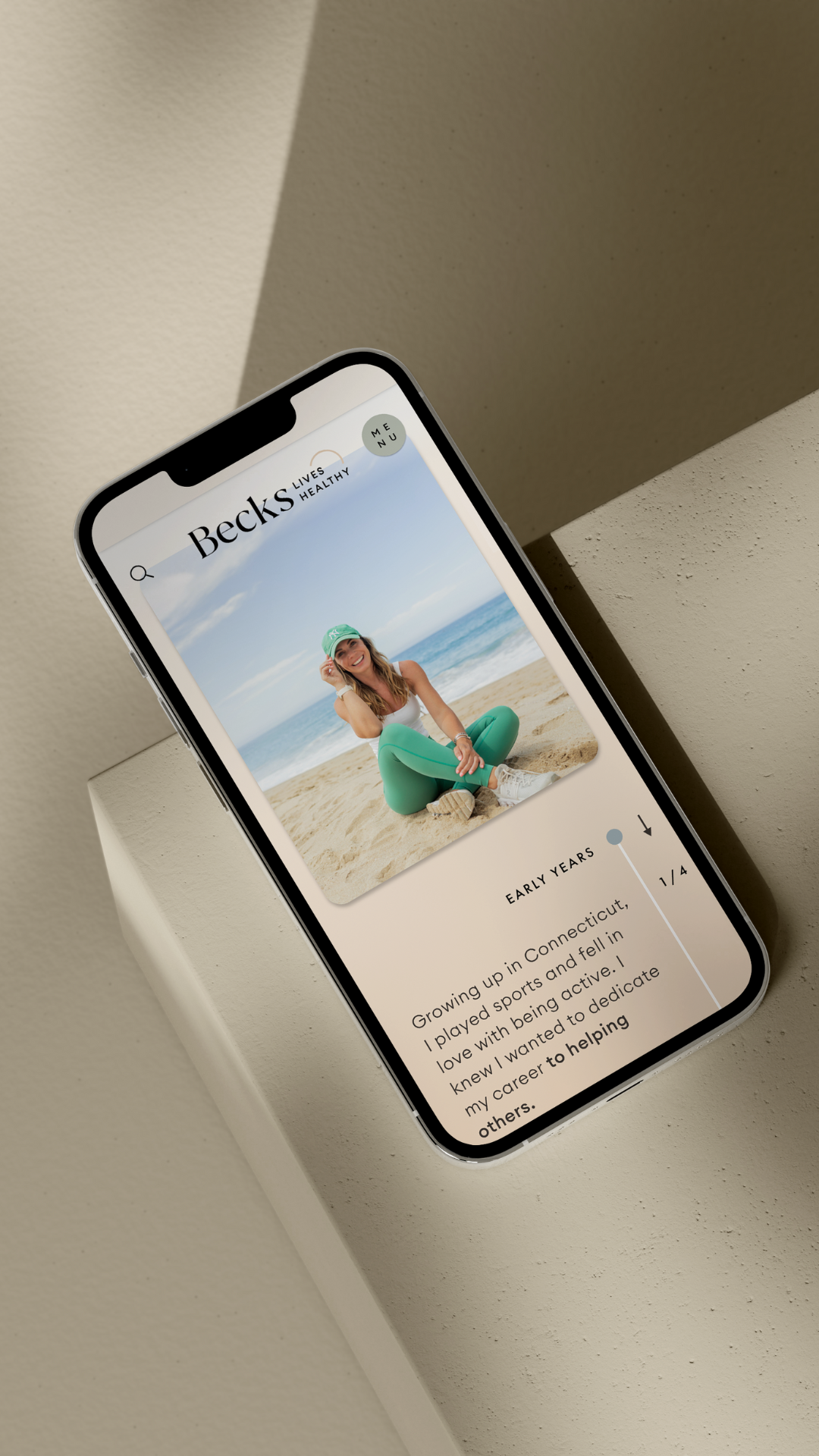
CL Studio Client Example
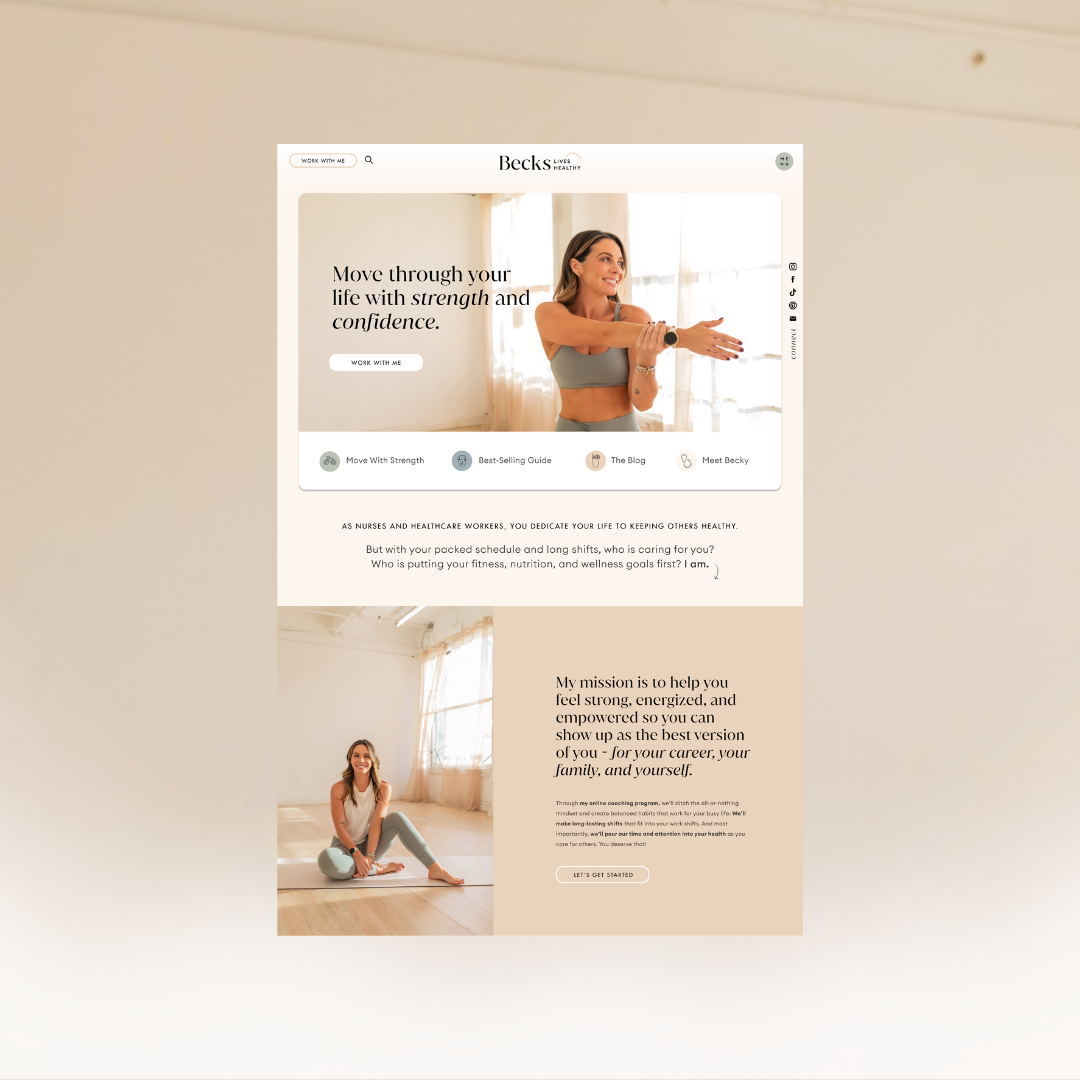
For our client BecksLivesHealthy, her key differentiator was her target audience: she’s not just a nutrition coach, and personal trainer for everyone. She’s a coach for nurses and healthcare workers because she herself is one. She understands that her target audience has a hard time prioritizing health and movement in their busy schedules and that is her unique brand perspective.
Once you can name your differentiator in one clear sentence, your brand has something to actually say, instead of just something to look like.
Personal Brand vs. Business Brand: Which Should You Build?
This is the question we hear most from nutritionists and coaches, and it deserves a real answer instead of a hedge.

A personal brand puts you (your face, your name, your voice) at the center. It works because trust in this industry is built person-to-person, and clients want to know who they're working with before they hire anyone. The tradeoff: the business is capped at your bandwidth, and it's harder to ever sell, hand off, or bring on additional practitioners.
A business brand builds a name and identity that could eventually exist independent of you: think a practice name rather than your personal name, a visual system that isn't built entirely around your face. It's a better foundation if you want to eventually add associates, build a team, or create a business with value beyond your own hours.
Neither is wrong. But you should choose on purpose, early, because it changes real decisions: what you name the business, whether the logo is your signature or a mark, whether the website is built around "meet me" or "our approach." [internal link: Branding for Health and Wellness Businesses] gets into this tension in more depth if you want the fuller picture.
What a Credible-but-Approachable Visual Identity Looks Like
Once you know your differentiator and which brand model you're building, the visual identity has an actual job to do: signal expertise without feeling clinical, and feel warm without feeling unserious.
That's a narrower target than it sounds. Nutrition and wellness brands tend to drift toward one of two failure modes:
Too clinical. Sterile, overly medical, all whitespace and no warmth. This can undercut the relationship-driven, human side of the work, especially for coaches whose value is largely in the ongoing support.
Too influencer. All soft focus, script fonts, and pastel gradients: visually pleasant, but it can read as more "content creator" than "credentialed practitioner," wwhich matters a lot if you want to attract clients who are ready to invest in real expertise, not just vibes.
The identities that land in the middle tend to share a few traits:
Typography that feels considered, not decorative: a clean, confident typeface as the workhorse, with personality reserved for accents, not body copy.
A color palette that's distinct from the industry default: you don't have to abandon warm, natural tones, but the exact combination and how you use them should feel like yours, not borrowed from the same five Pinterest boards everyone else pulled from.
Photography with a point of view: real photos of you and your work over generic stock, and if food or product photography is part of your brand, a consistent style rather than whatever's on hand that week.
A logo system that works small: most of your brand will be seen as a tiny circle on Instagram or a header on a phone screen. If it doesn't hold up at that size, it doesn't hold up.
The same trust-building logic that shapes Branding for Therapists maps onto this niche more closely than most people expect, even though the day-to-day work looks different.
How a Distinct Brand Affects What You Can Charge
Here's the part that matters most to your business, not just your feed: standing out is a pricing strategy, not just an aesthetic one.
When your brand looks interchangeable with a dozen other practitioners, the only variable a prospective client has left to compare on is price. You get pulled into competing with coaches charging less (sometimes far less) because there's nothing else distinguishing the offer.
A distinct brand does the opposite. It signals that you have a specific point of view, a specific method, and a specific way of working, which is exactly what someone is paying a premium for when they hire a specialist instead of following free advice online. Clients don't pay more for a nicer logo. They pay more because the brand made your expertise legible before they ever got on a call with you.
Frequently Asked Questions
I'm just starting out and don't have a big budget yet. Is it too early to invest in branding?
Not necessarily, but you don't need a full custom identity on day one. A lot of practitioners start with a simple, clean setup and invest in a fuller brand once they've validated their offer and have some revenue to reinvest. The important thing is deciding your differentiator and direction early, even if the full visual buildout comes later.
How is this different from working with a general branding agency?
CL Studio focuses on service-based and wellness/health businesses specifically, which means we already understand the trust dynamics, client relationships, and industry visual clichés you're working against, so we're not starting from a blank slate trying to learn your world.
Do I need a personal brand if I want to eventually grow past just me?
Not necessarily, but it's worth deciding this before you invest in a full identity, since it shapes your name, logo, and website structure. A business-forward brand can still feature you prominently. It's more about what the business is built around long-term.
What's actually included in a full branding and website project?
Typically brand strategy, visual identity (logo, color, type, brand guidelines), and a custom website (we specialize in the Squarespace, ShowIt, and Shopify), plus, if it's a fit, email marketing setup in Klaviyo or Flodesk. A full custom project generally runs $5,000–$20,000+, with semi-custom options as a middle ground, and takes about 6–12 weeks from kickoff to launch.
How do I know if I need a full rebrand or just a refresh?
If your current brand doesn't reflect your actual differentiator, or you cringe sending people to your own website, that's usually a sign you need more than a quick refresh. If the bones are solid but feel dated or inconsistent, a lighter refresh might be enough. That's a conversation worth having before committing to either.
Let's Build a Brand That Actually Sounds Like You
If you're a nutritionist, dietitian, or wellness coach who's tired of looking like everyone else in your feed, that's usually the first sign you're ready for a brand that reflects the specific way you actually work. We'd love to hear what makes your approach different. Reach out through the button below and let's talk about what a distinct brand could look like for your practice.

I'm Chloe, the founder of CL Studio, a boutique branding, web design, and email marketing agency based in Nashville, working with service-based and wellness businesses across the US.
Over the past 10 years, I've helped brands including Almost 30 Podcast, Clearstem Skincare, HarperCollins, and Free People bring their identity to life online, and I built CL Studio to bring that same level of craft to the practitioners and small businesses doing meaningful, personal work every day.