
By Chloe Leonard, Founder of CL Studio
Your logo is important. Your colors matter. Your typography shapes perception.
But none of it means much if you don't know how your brand sounds.
Brand voice is one of the most overlooked elements of brand identity, and one of the most powerful. As a branding agency for small businesses, we see it as the difference between being recognized and being remembered. It’s what makes your email feel like it came from a human, not a corporation. It’s what makes someone read your Instagram caption and immediately know it’s you.
What Is Brand Voice?
Brand voice is the consistent personality and tone your brand uses across all written communication. It's not just about being 'professional' or 'friendly', it's the specific way your brand uses language that makes it recognizable and distinct.
Think about brands with strong voices: Glossier feels cool and insider-y. Apple feels sleek and minimal. Wendy's Twitter account feels sharp and irreverent. These aren't accidents, they're intentional voice decisions maintained consistently.
Voice vs. Tone: Understanding the Difference
Your voice is consistent, it's the personality of your brand. Your tone shifts based on context.
Your voice might always be direct, warm, and confident. But your tone on a celebratory Instagram post is different from your tone in an email about a payment issue. Same voice, different application.
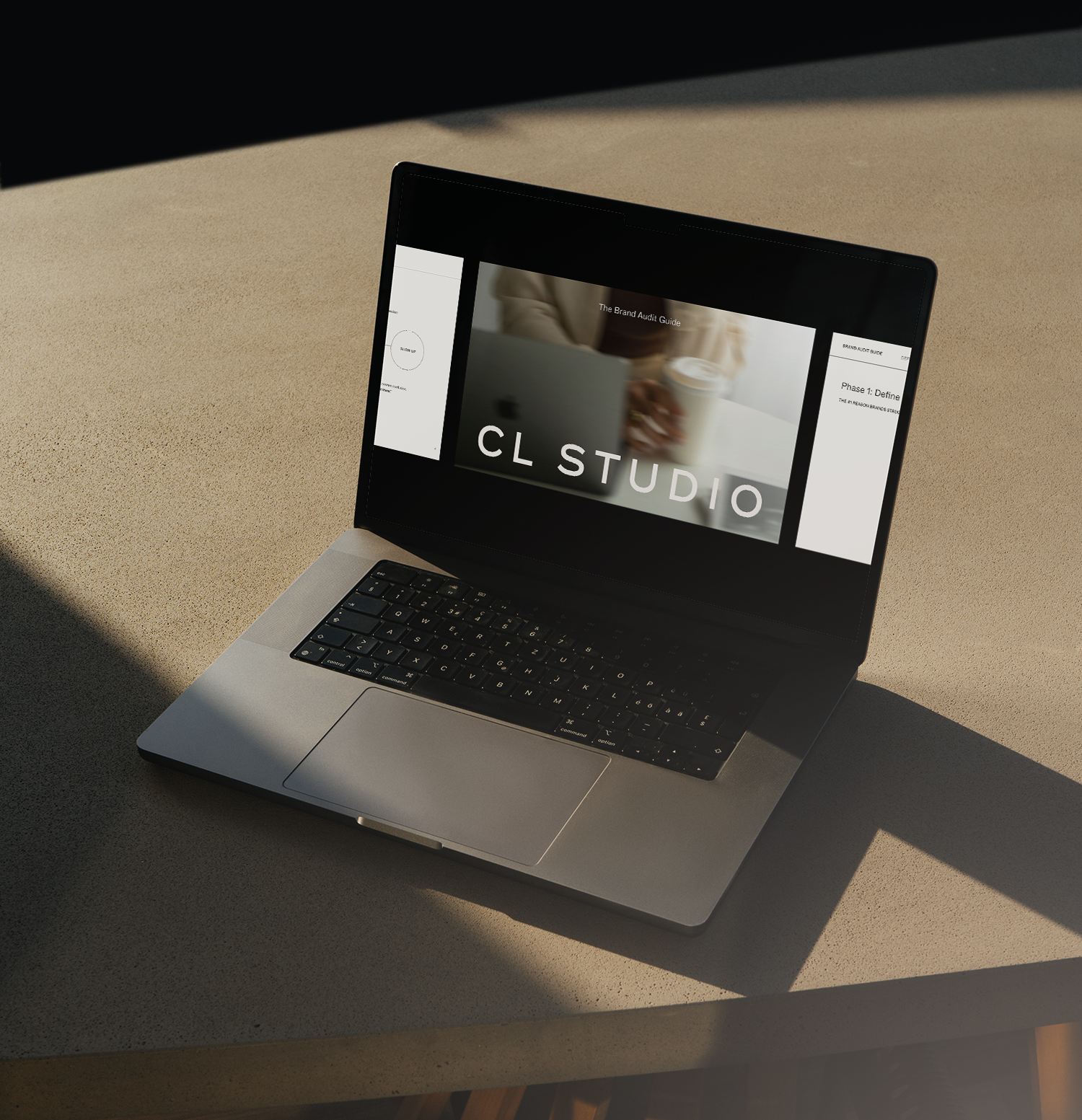
Download The Free Brand Audit Guide
Most brands don't fail because of bad design, they fail because something's off and nobody can pinpoint what. After nearly a decade running a creative agency, we can. We created a free brand audit guide so you can finally see your brand clearly, and know exactly what to fix.
How to Find Your Brand Voice
Step 1: Start With Your Brand Values
What does your brand stand for? If you value transparency, your voice should be honest and direct. If you value creativity, your voice can take more risks with language. Your values are the foundation your voice is built on.
Step 2: Define Your Brand Personality in 3–5 Adjectives
If your brand were a person, how would you describe them? Write down 3–5 adjectives. 'Confident, warm, no-fluff' is a voice direction. 'Smart, creative, a little bold' is a voice direction. These adjectives guide every piece of copy you write.
Step 3: Know Your Audience
Your voice should resonate with your ideal client, not just reflect your own personality. How do they speak? What language do they use to describe their problems and goals? The closer your voice aligns with how your audience communicates, the more resonant your copy will feel.
Step 4: Look at What You've Already Written
Pull some emails, captions, or website copy you've written that felt right. What do they have in common? Are they short and punchy? More narrative and story-driven? Do you use questions a lot? Specific examples? Look for patterns, they're revealing.
Step 5: Define What You're Not
Sometimes it's easier to define your voice by exclusion. Are you not overly corporate? Not cutesy? Not jargon-heavy? Not self-deprecating? Write a 'we are not' list alongside your 'we are' list.
How to Document Your Brand Voice
Once you've defined your voice, write it down. Your brand voice guide should include your voice characteristics with a brief description of each, do and don't examples for each characteristic, and sample copy in your brand voice alongside what it would look like off-brand.
This guide becomes part of your brand style guide and should be shared with anyone who writes for your brand, including you, after a long weekend when you've forgotten who your brand is.
Brand Voice at CL Studio
My brand voice is direct. No fluff, no filler, no endless caveats. It's warm but not soft. It says what it means and trusts the reader to keep up. It sounds like a smart friend who happens to know a lot about branding, not a textbook.
That voice is intentional. And it attracts exactly the kind of clients I want to work with.
Yours can do the same.

Hi there! I'm so glad you found us in this corner of the internet.
I'm Chloe Leonard, the founder of CL Studio, a boutique creative agency based in Nashville, TN. After 10 years of working with hundreds of clients, including Almost 30 Podcast, Clearstem Skincare, Harper Collins, and Free People, I've become more passionate than ever about giving founders the clarity and tools to build brands that TRULY stand out.
We help service-based and eCommerce businesses move from DIY beginnings to fully-realized brands – built with confidence and longevity in mind. Because good brands show up, but great brands own the room for years to come.